Hey, quick question—when you’re deep in the world of CNC manufacturing, do you ever stare at a tiny, super-tight-tolerance precision part and think, “Is EDM even up for this?” As a CNC die sinker EDM supplier who’s been elbow-deep in tungsten carbide, hardened tool steel, and those impossible 0.0002mm tolerance jobs for over a decade, I get it. I’ve fielded that exact question so many times at trade shows, over the phone, and even late-night Slack messages from shop owners panicking because their mill just couldn’t hit the mark on a part. Today, let’s cut through the hype and the noise—can EDM machine precision parts? The short answer is hell yes, but only if you’re not using it like a glorified hole-puncher. Let’s dive in, no jargon, no corporate fluff, just real talk from someone who’s seen both the wins and the absolute disasters. CNC Die Sinker EDM

First off, let’s get on the same page about what precision even means here. I’m not talking about a part that’s “kinda close” or works if you sand it a little. I’m talking about tolerance ranges that most conventional machining can’t touch—like ±0.001mm, or surface finishes so smooth you can’t feel a scratch when you run your finger over them. Conventional mills and lathes rock for high-volume, roughing out parts, but when you’re working with materials that’ll snap a carbide tool like a toothpick—think D2 tool steel, Inconel, ceramic matrix composites—EDM is the only game in town. And when you pair it with modern CNC controls, it’s not just an option; it’s the only way to get that kind of precision without breaking a single tool.
Let’s talk about the core of why EDM kills at precision, shall we? It erodes material with electrical sparks, right? No physical contact between the tool (electrode) and the workpiece. That’s the big one. No contact means zero tool deflection, no chatter, no pressure pushing the part or the tool out of alignment. If you’ve ever fought a mill where a 1mm endmill wanders 0.005mm halfway through a deep slot because the material is too hard, you know exactly what I’m talking about. With EDM, the only thing moving is the electrode feeding tiny little spark gaps—like, literally a few microns apart—between itself and the part. That’s how you hit tolerances that’d make a machinist using conventional tools throw their calipers across the shop floor.
But wait, not all EDMs are created equal, and that’s where most people mess up. I’ve had a customer call me last year, panicking because their old, beat-up sinker EDM (the kind that’s been in their shop since 1998, with a controller that runs on Windows 95) was “totally garbage for precision.” Turns out they were using it for 3D cavities on a medical implant part that needed ±0.002mm tolerance. You can’t do that on a 25-year-old machine! Back in the day, EDMs were rough, they had manual adjustments, and spark gaps were all guesswork. Now? Modern CNC die sinker EDMs have linear motor drives, high-resolution glass scales, and adaptive spark control that adjusts in microseconds. These machines can hold positions to within 0.0005mm, no sweat. I watched a job last month where a client needed a set of mold inserts for a smartphone camera lens mold—yeah, that tiny, the kind where if the cavity is even a hair off, the lens won’t focus. They used our mid-range die sinker EDM, and hit ±0.0015mm across 8 identical cavities. Conventional machining couldn’t touch that, even with a ball mill and ultra-precise CNC.
Let’s get into the nitty-gritty of what makes modern EDM precision possible, because this isn’t rocket science, but it’s the stuff that makes the difference between a part that works and one that’s scrap. First, electrode technology. A lot of people still think electrodes are just blocks of copper or graphite you mill and glue to a holder. Nah. If you’re going for precision, you need high-density graphite (for wear resistance, which means the electrode doesn’t wear unevenly mid-job) or oxygen-free copper (more stable for fine finishing). I work with a lot of clients who use 3D-printed electrodes now, too—wait, hold on, don’t roll your eyes. 3D printing high-performance electrode materials gives you way more detail than milling tiny, complex electrodes, and the surface finish is so good you can skip polishing half the time. That cuts down on human error, which is a huge precision killer. If your electrode isn’t made correctly, no matter how good your EDM is, you’re not hitting tolerances.
Then there’s the spark generator. Old EDMs had analog generators that were like a dimmer switch for sparks—rough, inconsistent. Modern ones have digital pulse generators that can adjust the spark in nanoseconds. You can set the energy per spark to be as tiny as 1 microjoule for finishing, so you’re removing material in layers so thin they’re barely atomic. That’s how you get surface finishes like Ra 0.05μm—so smooth, it’s like a mirror, which is exactly what you need for things like optical molds or medical parts that need to be sterile. No burrs, no micro-cracks, nothing that’ll ruin the part’s function. I had a job a while back for a aerospace client who needed a turbine blade cooling hole with a rounded edge (called a “die sinker radius”) that couldn’t have any sharp corners that’d cause stress fractures. EDM was the only way to get that exact radius without tool marks, and the precision was within 0.001mm. Conventional drills would’ve left a burr, and a mill would’ve rounded the edge too much.
But here’s the catch—EDM precision isn’t just about the machine. It’s about how you set up the job, and the environment. You can put a $500k EDM in a shop that’s vibrating from a nearby punch press, and you’ll get garbage. Thermal expansion is a real thing, too—if the shop temp swings 5 degrees Fahrenheit during a long job, your workpiece and your electrode will expand differently, throwing off tolerance. That’s why the best precision EDM shops have temperature-controlled rooms, vibration-isolated bases for their machines, and even use compressed air to blow dust off the electrode mid-job—because a tiny dust particle in the spark gap can mess up a single spark, which might add up to a tolerance error. I always tell new clients: if you want precision with EDM, don’t skimp on the setup. Spend an extra hour leveling the machine, calibrating the electrode holder, and checking the workpiece for flatness, and you’ll save yourself days of scrap parts.
Wait, let’s address the elephant in the room: a lot of people think EDM is slow for precision jobs. Yeah, fine finishing with EDM is slower than roughing with a mill, but when you need that tolerance and surface finish, you have to take your time. And the thing is, you don’t have to hand-finish it. Modern EDM can do multiple passes: rough pass to get most of the material out, medium pass to clean up the rough surface, finish pass at that tiny spark gap I mentioned. So you get precision without all the post-machining labor. I had a client who was spending 10 hours polishing a mold insert after conventional machining, and getting tolerance issues because of inconsistent hand polishing. They switched to our die sinker EDM, did three-pass EDM, and the polishing time dropped to 1 hour—plus, their tolerance was way tighter, and they had zero scrap from polishing errors. That’s a win-win, honestly.
But let’s not pretend EDM is perfect. If you’re machining soft, low-tolerance parts for consumer products, EDM is overkill and way more expensive than a mill. If you need a part that’s 10mm big and has a ±0.01mm tolerance, a mill will do that faster and cheaper. EDM is for when conventional machining can’t do it—for the hard materials, the complex shapes, the super-tight tolerances. I’ve had clients try to use EDM for jobs it wasn’t built for, and they end up hating it, but when they use it for exactly what it’s good at? They’re obsessed. Last year, a medical device maker came to me because their mill couldn’t make a tiny suture cutter part out of 440C stainless steel (super hard, right) with a curved edge that was only 0.5mm thick. The mill kept deflecting, so they were getting edge chips and tolerance errors. We set them up with our die sinker EDM, made a small graphite electrode with the exact curve, and hit ±0.001mm on the edge—no chips, no deflection, nothing. They’re now doing all those parts with EDM, and their scrap rate dropped by 30%. That’s the proof right there.
Another thing I get asked all the time: “Can EDM make parts with internal features?” Like, tiny slots or holes inside a workpiece, where you can’t fit a mill or a drill. Yeah, absolutely. EDM can make internal cavities, undercuts, tiny holes (we’re talking 0.05mm diameter, like a needle’s edge), any shape you can program into the CNC. Last quarter, we had a client making a fuel injector part for diesel engines—super small, with a series of tiny internal holes that spray fuel, all aligned within 0.002mm. Conventional machining couldn’t get those holes aligned, because you’d have to flip the part and re-fixture, which throws off alignment. EDM does all that in one setup, so alignment is perfect. That’s precision you can’t get any other way.
Now, let’s talk about what I see go wrong when people try to use EDM for precision. The biggest mistake? Using the wrong electrode material. If you use cheap graphite that’s not high-density, it’ll wear unevenly during finishing, so your tolerance will drift halfway through the job. Another mistake? Not calibrating the machine properly. I had a client a few months back who forgot to calibrate the linear scales on their EDM after moving the machine to a new shop. They were getting 0.008mm errors across a 10mm part, which might not sound like a lot, but it’s way over their tolerance. Once we calibrated the scales, they fixed it in 10 minutes. And then there’s rushing the job—skipping the medium finish pass to save time, so you have to do more polishing, which introduces human error. Slow down for the finish pass, and you’ll get way better precision.
At the end of the day, EDM is like a specialized tool in a mechanic’s toolbox. You wouldn’t use a wrench to drive a nail, right? And you wouldn’t use a mill to make a part that needs to be inside a hardened tool steel with ±0.001mm tolerance. Can EDM machine precision parts? Hell yes, when you use it right. It’s not a one-size-fits-all solution, but when you pair a modern CNC die sinker EDM with the right setup, electrode, and job parameters, it can hit tolerances that conventional machining still can’t touch. It’s been the backbone of aerospace, medical, mold making, and automotive manufacturing for decades, and that’s not by accident—precision is what it does best.
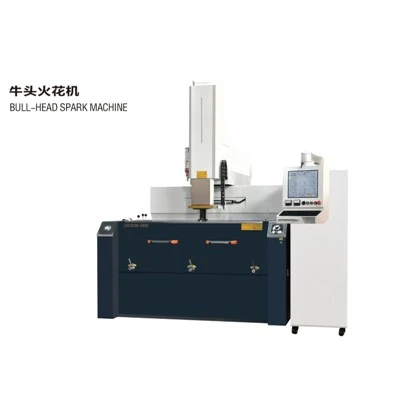
If you’re working on a part that’s got you stumped—whether it’s a tiny medical implant, a precision mold insert, an aerospace component with tight tolerances, or something else that conventional machining can’t nail—reach out. I’ve been helping shops figure out their EDM needs for years, and I can walk you through exactly what machine or setup will get you the precision you need, no fluff, no jargon, just honest advice. Let’s chat about your project.
Drill EDM REFERENCES
- IEEE Transactions on Electronics Packaging Manufacturing, Vol. 32, No. 2, "Precision Modeling of CNC Die Sinker EDM for Micro-Machining Applications", 2009
- Manufacturing Processes for Engineering Materials, Kalpakjian S. and Schmid S.R., 7th Edition, Pearson Education, 2016
- Society of Manufacturing Engineers (SME) Technical Report, "EDM Precision Capabilities for Hard Materials", 2021
Taizhou Ouling CNC Equipment Co., Ltd.
As one of the most professional CNC die sinker EDM manufacturers and suppliers in China, we’re featured by quality products and good price. Please rest assured to buy advanced CNC die sinker EDM made in China here from our factory. Welcome to contact us for quotation.
Address: No.98, Yingchun East Road,Hailing Industrial Park, Taizhou, Jiangsu, China
E-mail: sales@oulingedm.com
WebSite: https://www.oulingedm.com/
