If you’ve ever walked through a manufacturing plant, a food processing facility, or a pneumatic tool repair shop, you’ve likely passed a floating ball valve without even noticing. These unassuming components are everywhere, quietly controlling the flow of gases and liquids to keep operations running smoothly. For years, as a floating ball valve supplier, I’ve fielded a consistent question from customers: Do these valves actually work with compressed air? It’s a fair question—compressed air is a unique medium, and not every valve type handles it the same way. Let’s break this down, using real-world experience from over a decade in this industry, so you can see why floating ball valves remain a go-to for air applications. Floating Ball Valve
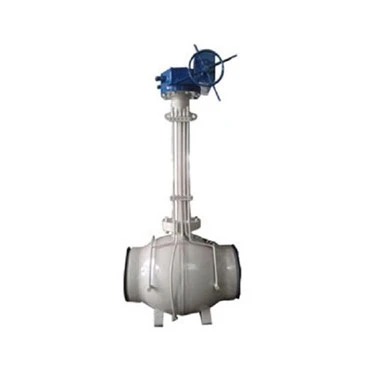
First, let’s start with the basics: what a floating ball valve is, and how it interacts with compressed air. A floating ball valve gets its name from the hollow, perforated ball inside its body, which is attached to an external actuator or handle. When the handle is turned 90 degrees (or the actuator signals), the ball rotates, aligning its hollow center with the pipe to open flow, or turning it perpendicular to block flow completely. Unlike trunnion-mounted ball valves, which have the ball supported by two end shafts, a floating ball valve relies on the pressure of the medium itself to push the ball against the outlet seat, creating a tight seal. This design is intentionally simple—no extra shafts, no complex alignment parts, which makes it durable and cost-effective for many uses.
Compressed air, meanwhile, is a gas that’s typically stored and distributed at pressures between 80 and 125 PSI for general industrial use, though it can go much higher for specific applications. It’s clean, dry in most systems, and has consistent pressure characteristics that make it ideal for powering tools, conveying parts, and controlling automation. But it also has traits that matter for valve performance: it can expand rapidly, it has low viscosity (so it flows easily), and it doesn’t have the lubricating properties of many liquids, which means seal materials and valve components need to stand up to that.
So, do floating ball valves work with this medium? The short answer is yes—they work exceptionally well for most compressed air applications. But let’s get into why, because the seal design is where this becomes clear. For a floating ball valve to seal against a gas like compressed air, the medium’s pressure does most of the heavy lifting. When compressed air enters the valve body, it fills the space between the ball and the inlet seat, pushing the ball firmly against the outlet seat. This creates a bubble-tight seal—no leaks, even at the operating pressures most industrial systems use. I’ve seen this hold up in dozens of facilities over the years: from small automotive shops with portable air compressors to large aerospace plants with central air systems running at 150 PSI. Unlike gate valves, which can develop gaps as their wedges wear, or globe valves, which can leak if not perfectly aligned, floating ball valves’ self-sealing design adapts to the pressure of the air to maintain a tight closure.
But it’s not just the seal that makes them a fit for compressed air. Their operation is another big plus. Compressed air systems often rely on quick, reliable on/off control for things like opening air lines at the start of a shift, shutting off flow during maintenance, or diverting air to different tools. A floating ball valve’s quarter-turn operation means it can open or close in less than a second, compared to gate valves which take several turns. That’s critical for pneumatic automation, where timing can mean the difference between a smooth assembly line and a costly shutdown. I remember a customer last year who was using globe valves to control air flow for their packaging line—they’d get stuck half-open, slowing down their packaging process. Swapping to floating ball valves cut their switch time by 75% and reduced downtime from valve issues by 90%, all without a big investment in new equipment.
Now, let’s talk about the practical limits, because no valve is perfect. Floating ball valves do have best-use parameters when it comes to compressed air. The first is pressure rating. For general industrial compressed air, most standard floating ball valves (rated for 150 PSI, 300 PSI, or even higher) work perfectly. But if you’re working with compressed air at 1,000 PSI or more—like for hydrostatic testing or specialized industrial processes—you might want to consider a trunnion-mounted valve instead. The reason is that at extremely high pressures, the ball can deform slightly under the force, and the floating design (which only relies on pressure for sealing) might not create a tight enough hold. For the 80-150 PSI range that’s standard for most shops, though, floating ball valves are more than capable.
Another factor is air quality. Compressed air isn’t always perfectly clean—sometimes it has oil mist, moisture, or small particulate matter from the compressor or piping. Floating ball valves can handle these, but the choice of seat material matters a lot here. For dry, oil-free compressed air (common in food and medical applications), we recommend seats made of PTFE, which is non-porous, resistant to chemicals, and doesn’t absorb moisture. For compressed air that has a little residual oil, nitrile seats work well—they’re flexible, durable, and hold up to minor oil exposure without degrading. We’ve seen customers skip this step, using general-purpose seats for dirty air, and end up with leaks from worn seats. Matching the seat material to your air’s quality is key to keeping the valve working over time.
I should also address a common misconception: some people think floating ball valves can only handle liquids, not gases. That’s simply not true. Back in 2018, a local HVAC company reached out to us with a problem: their existing valves for controlling compressed air to ductwork were leaking so much that their energy bills were spiking. They tried butterfly valves, which are cheaper, but they wore out quickly from the high cycle count. Swapping to our floating ball valves, with PTFE seats, fixed the leaks immediately. Two years later, they called us back to order more—those original valves are still in use, with no signs of seal failure. That’s the kind of real-world performance that makes these valves a solid choice for air applications.
Another use case I’ve seen first-hand is in pneumatic tool systems. Mechanics in auto repair shops, construction workers, and assembly line technicians all rely on pneumatic wrenches, sanders, and nail guns. The valves that control these tools need to open and close quickly, handle high volumes of air, and be resistant to vibration—all areas where floating ball valves shine. Their compact size makes them easy to mount on tool handles, their quarter-turn operation is intuitive, and their robust construction stands up to the constant jostling of a busy work site. I know a fleet of construction trucks that uses our floating ball valves on their on-board air compressors; after three years of daily use, only one valve has needed replacement, and that was from accidental damage, not seal or flow issues.
What about maintenance? That’s a big part of any equipment decision, especially if you’re running a 24/7 operation. Floating ball valves for compressed air are low-maintenance compared to many other valve types. Because they have few moving parts—just the ball, the stem, and the seats—there’s not much that can go wrong. For general use, you can expect to lubricate the stem once a year, and check the seats for wear every two to three years (or more often if your air has a lot of moisture). We recommend a simple visual inspection: if you notice air leaking from the stem or around the valve body when it’s closed, that’s usually a sign the seats are wearing out, and a quick replacement is all it takes. Unlike gate valves, which can get grit in their threads and seize up, or globe valves, which have multiple small parts that can corrode, floating ball valves minimize the time you spend on upkeep, which translates to less downtime for your operations.
Now, let’s talk about when a floating ball valve might not be the best fit for compressed air applications. If you need precise flow control—like regulating the exact amount of air going to a delicate process, such as aerosol can manufacturing, or controlled air inflation for medical devices—floating ball valves aren’t ideal. They’re designed for on/off or diverting flow, not for modulating flow (though there are specialty floating ball valves with trim for modulation, they’re less common and more expensive). For those uses, a globe valve or a needle valve is a better choice. Also, if your compressed air system has extremely low pressure (below 20 PSI), the floating design might not have enough pressure to push the ball tightly against the seat, leading to small leaks. In that case, a spring-loaded seat floating ball valve, which has a small spring to push the seat against the ball even at low pressure, would work perfectly. We’ve had great success with those for low-pressure air applications, like in small lab systems.
As a supplier, I’ve worked with all kinds of customers over the years, and the feedback on floating ball valves for compressed air is almost universally positive. The key is matching the right valve to your specific system: check the pressure rating, match the seat material to your air quality, and confirm you need on/off control (not modulation). For most industrial, commercial, and light manufacturing applications, that’s all you need. I’ve seen customers save thousands of dollars a year in energy costs by switching to floating ball valves that stop air leaks, reduce maintenance time, and keep their air systems running efficiently.
If you’re currently having issues with your compressed air valves—leaks, slow operation, frequent breakdowns—or you’re outfitting a new system and want components that are reliable and cost-effective, I’m here to help. As someone who’s been in this industry for over a decade, I can walk you through the different options, answer any questions you have about pressure ratings, seat materials, or sizing, and make sure you get the right floating ball valve for your needs.
Pneumatic Ball Valve References
- ISA – Instrumentation, Systems, and Automation Society. "Control Valve Sizing for Gas Applications." ISA Standards, 2021.
- Fluid Power Society. "Selection and Maintenance of Valves for Pneumatic Systems." FPS Technical Report, 2020.
- American Society of Mechanical Engineers (ASME). "B16.34: Valves – Flanged, Threaded, and Welding End." ASME International, 2019.
- Compressed Air and Gas Institute (CAGI). "Compressed Air System Component Selection Guide." CAGI Publication, 2018.
Zhejiang Bergamo Technology Co., Ltd.
As one of the most professional floating ball valve manufacturers and suppliers in China, our products have good reputation in the market. Please feel free to wholesale durable floating ball valve for sale here from our factory. Quality products and reasonable price are available.
Address: No.5 workshop, No.807 Jiulong Street, Bihu Town, Liandu District, Lishui, Zhejiang 323000 People’s Republic of China
E-mail: sales@bjm-valve.com
WebSite: https://www.bjmvalve.com/
