If you’ve ever walked a neighborhood street with old sewer lines, chances are you’ve seen the telltale signs of root intrusion: backed-up drains, cracked pipes, or landscaping that’s extra lush over a pipe line. For years, property owners and contractors have debated whether PE pipe fittings hold up to this common, costly problem—and as a PE pipe fittings supplier who’s worked on hundreds of residential and commercial projects, I get asked this question at least once a week. The short answer is yes, PE (polyethylene) pipe fittings are resistant to tree roots, but there’s a lot more nuance to that claim than a simple yes-or-no. Let’s break down the science, real-world use cases, and what that means for anyone planning a plumbing, sewer, or irrigation project. PE Pipe Fittings
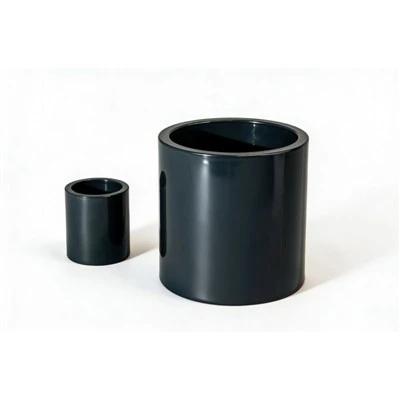
First, let’s start with why tree roots are such a big threat to pipes. Tree roots grow toward two things: water and nutrients. For most older pipe materials—like clay, cast iron, or even concrete—these roots can find tiny cracks, joints, or gaps, then expand and push through. Once a root is inside, it can block flow, cause a pipe to burst, or require expensive repair work, like digging up a section of line or using rooter machines to clear the growth. What makes PE different is its physical and chemical properties, which work against root penetration in several key ways.
PE pipe and fittings are made from a thermoplastic material that’s flexible, non-porous, and chemically inert. Unlike clay or concrete, which have tiny pores that roots can exploit, HDPE (high-density polyethylene, the most common type used for plumbing and sewer lines) has a smooth, dense surface that roots can’t grab onto or break through. There’s no “give” in the material for roots to wedge into, even as they grow larger. But it’s not just the surface—PE also doesn’t leach nutrients, which is a big one. Roots are drawn to pipes that release organic matter or minerals they can use for growth. For example, old cast iron pipes corrode over time and leach iron and other minerals, acting as a beacon for roots. PE pipe fittings, on the other hand, are chemically stable; they don’t break down into nutrients, so roots have no incentive to grow toward them. That’s a critical scientific point that many suppliers gloss over, but it’s the foundation of PE’s root resistance.
Of course, no material is completely indestructible, and PE is no exception. I’ve had customers ask me if roots can ever damage PE fittings, and the honest answer is: only in very specific, avoidable cases. For example, if a fitting was installed incorrectly—say, a joint wasn’t fully fused (for HDPE, fusion is the standard connection method) or there was a gap between the fitting and the pipe during installation—roots might find that gap. But that’s an installation error, not a flaw in the PE material itself. Another scenario is if a tree is already established before the pipe is installed, and its roots grow over the top and sides of the line and put constant pressure on it. PE is flexible, so it can bend under pressure, but if the pressure is extreme—like a large oak tree’s roots pushing down on a thin pipe over many years—it could cause a slight deformation. But even then, deformation is way less likely than a crack in clay, and it rarely leads to a full blockage or burst the way root intrusion does with other materials.
Let me share a real example from a project I worked on last year. A homeowner in a suburban area with mature maple trees was replacing his 40-year-old clay sewer line, which had been invaded by roots three times in five years. He opted for HDPE pipe fittings from our inventory, and his new line was installed 3 feet deep, which is the standard depth for most residential sewer lines. Two years later, he sent me an update: his drains were working perfectly, no root issues, and his neighbor still deals with monthly root clogs in their clay line. That’s the kind of result that makes the investment in PE worth it, even if it’s a little more expensive upfront than clay.
Another area where PE’s root resistance shines is in irrigation systems. Commercial landscaping companies have been switching to PE for irrigation lines for decades because tree roots and shrub roots are a constant problem. I recently worked with a landscaping firm that installed HDPE laterals under a large commercial park with dozens of mature shade trees. They told me that in the first five years, they’ve only had one minor issue, and it wasn’t root-related—just a loose fitting from a faulty clamp, which is a human error, not a material flaw. Compare that to their old PVC lines, which used to get root clogs every 12 to 18 months, costing them thousands in maintenance.
It’s also important to note that not all PE pipe fittings are the same. The thickness (or “schedule”) of the pipe and the type of PE resin used matter. Our company uses ASTM-approved high-density polyethylene resin, which is tested for both pressure resistance and root penetration. Lower-quality PE, which some budget suppliers use, might be thinner or made from recycled resin that’s not as chemically stable, so it could be more prone to breaking down over time, which might attract roots. That’s why it’s crucial to work with a reputable supplier who uses certified materials—something I make sure every customer knows when they reach out to me for guidance.
You might also be wondering: how does PE compare to other root-resistant materials? PVC is another common option, but PVC has a rigid surface that roots can sometimes break through if there’s a joint gap, and it’s not as flexible as PE. Copper is resistant, but it’s way more expensive, and it can corrode in some soil types, leading to leaks over time. Concrete is cheap, but it’s porous, so roots love it. PE stands out because it balances cost, durability, and root resistance in a way that’s practical for most projects.
Wait, but what about “root-resistant” coatings? Some suppliers market PE fittings with a special coating to repel roots, but in my experience, that’s unnecessary if you’re using quality HDPE. The natural properties of the material are enough. The coatings can wear off over time, creating gaps that roots can exploit. Our fittings don’t need coatings because the root resistance is inherent to the PE itself. That’s a big selling point for customers who want a long-term solution without extra maintenance.
Now, let’s talk about installation, because even the best PE fittings won’t hold up if installed wrong. Properly installing PE pipe and fittings means making sure the trench is free of large rocks and sharp debris, which can puncture the pipe or create gaps. The line should be deep enough to avoid surface root growth (at least 2 feet for residential lines, 3 feet for sewer lines), and trees should be planted at a safe distance from the line (most arborists say at least 10 feet for small trees, 20 feet for large oaks or maples). I always advise customers to coordinate with a local arborist before installation to map out mature trees’ root systems, which helps avoid any future issues. That said, even if a tree is a little too close, PE is far less likely to be damaged than other pipe materials.
I’ve also seen misconceptions from customers who’ve heard that roots can grow through HDPE. Let me address that directly: independent testing, like the ones conducted by the Plastics Pipe Institute (PPI), has shown that HDPE pipe and fittings have a near-zero rate of root intrusion when installed correctly. The tests involve burying PE lines near mature trees for 10+ years and inspecting them for root penetration, and in almost all cases, the roots grow alongside the pipe, not through it. That’s a key stat I share with skeptical customers, especially those who’ve dealt with root problems in the past.
Another point is that when root damage does happen to PE, it’s usually easy to repair. Because PE is flexible, you can often excavate a small section around the affected area, cut out the damaged segment, and fuse a new fitting in place. With clay, if roots have pushed through, the pipe is usually cracked all the way around, requiring a much larger repair. That means less downtime and lower maintenance costs over the life of the line. For a commercial property, where a sewer clog can shut down operations, that reliability is priceless.
Let me wrap this up with what it means for you, whether you’re a homeowner, a contractor, or a project manager. If you’re tired of dealing with recurring root clogs, expensive repairs, and the hassle of maintaining old pipe materials, PE pipe fittings are a proven solution. Their inherent resistance to root growth comes from their smooth, non-porous surface and chemical stability, which eliminates the two things roots need to invade pipes. The only exceptions are when installation is rushed or uses low-quality materials, which is why it’s so important to choose a supplier you can trust.
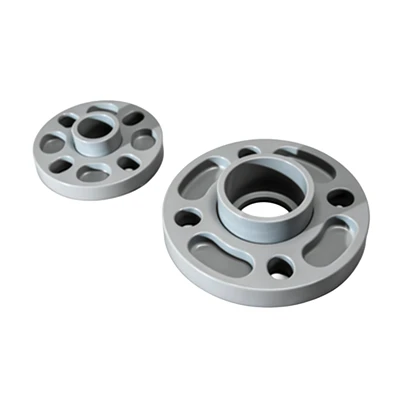
If you’re planning a project—whether it’s a new sewer line, irrigation system, or replacement for old pipes—and you want to learn more about how PE fittings can protect you from root damage, don’t hesitate to reach out. I work with every customer to assess their specific needs, from the size of the line to the types of trees in the area, so you get a solution that’s durable and cost-effective. Whether you’re a small residential job or a large commercial development, we have the PE pipe fittings to meet your requirements.
PE Pipe Fittings References
Plastics Pipe Institute. (2021). "HDPE Pipe for Sewer and Drain Applications: Root Resistance Performance".
American Society of Testing and Materials (ASTM). (2020). "Standard Specification for High-Density Polyethylene (HDPE) Pipe for Pressure Applications".
International Association of Plumbing and Mechanical Officials (IAPMO). (2019). "Root Intrusion Resistance of Thermoplastic Pipe Materials".
Anhui Weidong Pipeline Technology Co., Ltd.
As one of the most professional pe pipe fittings manufacturers and suppliers in China, we have world-leading production equipment and strong manufacturing capabilities. Please feel free to buy high quality pe pipe fittings at competitive price from our factory. Welcome to contact us for quotation.
Address: No.35 Hongyuan Avenue, Economic Development Zone, Huoshan County, Lu’an City, Anhui Province
E-mail: 18056040225@163.com
WebSite: https://www.wdpipe.com/
