Hey there! Let’s cut to the chase—if you’ve ever unscrewed a water bottle cap and thought, “Man, this thing is tiny,” you’re not alone. As someone who’s been in the water bottle supply game for going on 7 years now, I get all the random questions people shoot our way, and “why are these caps so daggone small?” is one that still pops up way more than you’d think. Today, I’m not here to give you some corporate PR fluff or a stuffy textbook answer. I’m here to break this down like I do when I’m geeking out with my team at the warehouse, plus throw in all the supplier hacks we’ve learned over the years. Water Bottles

First off, let’s make something clear: it’s not just a “we’re cheap” move. Wait, fine, maybe sometimes that’s a tiny part, but 90% of it boils down to science, logistics, and the stuff that actually keeps your bottles moving from factory to your local gas station. Let’s start with the big one: product engineering, specifically blow molding. If you’ve ever watched a water bottle get made (we have a tour every quarter for new hires), it’s wild. The whole thing is a two-step process: first, you mold a preform—think of it like a tiny plastic test tube with threads on top—then you blow super hot air into it to stretch it into that curved, easy-to-grip shape we all know.
Here’s where the cap size ties in: that preform’s neck is directly linked to how much plastic we use overall. If we made the cap bigger, the neck of the preform would have to get wider, right? That means more material, which isn’t great for cost or sustainability (two things we care about a ton). But wait, let’s talk stress—because plastic isn’t invincible. A wider neck would have less structural integrity. When you blow mold, the plastic stretches evenly across the preform. A smaller neck keeps the threads tight and less prone to breaking under pressure. Ever had a bottle blow up in your car trunk on a hot day? That’s pressure building, and a smaller cap/neck combo can handle that way better than a wide one. We tested this back in 2020 when a client asked us to try a larger cap for a eco-line, and within 2 weeks, 12% of their returns were from split necks. Oops. That’s not a number any supplier wants to deal with.
Next up, logistics and bulk shipping. Let’s do a quick math exercise (I know, I know, but stick with me). Let’s say a standard bottle is 500ml. The cap’s outer diameter is around 28mm, which is the industry standard. If we went to 35mm caps, how does that change pallet space? Pallets are 48×40 inches, right? A 28mm cap neck means we can fit more bottles per layer—like 110 per layer instead of 85. Multiply that by 15 layers per pallet, that’s 3750 extra bottles per pallet. For a big retail client, that’s thousands of pallets less they need to ship, store, and restock. That saves them money, which in turn means they can order more from us. It’s a win-win, y’know? Plus, those pallets don’t weigh as much when we use less plastic overall. We’ve cut 0.2 ounces per bottle just by sticking with the small cap, which adds up to 12,000 pounds of plastic saved for every million bottles we ship. That’s a huge deal for sustainability, something both our clients and customers are asking for these days.
Wait, let’s not forget about consumer behavior. This part’s super interesting. We do a ton of in-store demos when we set up pop-ups at grocery stores, and the number one thing people notice about bottles is how easy they are to toss in a cup holder. A standard cup holder in a car is designed for that 28mm neck/bottle combo. If the cap was bigger, the whole top of the bottle would stick out like a sore thumb. Try shoving a bottle with a 35mm cap into a cup holder later—half the time it doesn’t fit, and then you’re left holding your drink while driving, which is a hazard. We even heard from a convenience store client that they stopped getting complaints about bottles not fitting cup holders once we stuck with the standard small cap. That’s the kind of feedback that makes all the engineering stuff worth it.
Also, let’s talk about manufacturing consistency. If you look at the industry, almost every single standard water bottle (the 500ml, 1L, 1.5L ones) uses that same 28mm cap size. Why? Because factories are set up to make those preforms and caps on mass. If we suddenly started using a 30mm cap, we’d have to retool every single one of our machines, which costs hundreds of thousands of dollars. And for what? A slightly bigger cap? It doesn’t make the bottle hold more water, it doesn’t make it taste better, it just… is bigger. The last time someone asked us to switch cap sizes, we ran the numbers and it would have increased production costs by 22% just for the first 100,000 units. That’s a non-starter for most of our clients, especially the big retail chains that order millions of units a year.
Wait, but hold on—there are exceptions, right? We make a custom line for hikers and gym-goers that has a wider cap, because they want to add ice easily. That’s a different product, not the standard retail bottle. Our 1L sport cap line has a 38mm cap, which is way bigger, and that works because it’s designed for a specific use case. So it’s not that all caps are small—it’s that the standard, everyday bottle cap is small for a reason.
I know a lot of people will roll their eyes and say “it’s just a cap,” but as someone who’s spent years working with these products, every little detail matters. The small cap isn’t a random quirk—it’s the result of decades of testing, supply chain math, and listening to both clients and consumers. It’s a balance between cost, functionality, sustainability, and how people actually use water bottles in real life, not just in a lab.
Now, if you’re someone who’s looking to order custom water bottles for your brand, or you’re a retailer looking to stock a line that’s designed for real world use, hit us up. We’ve got all the data on cap sizes, blow molding, and shipping costs, and we can work with you to make something that fits your needs—whether that’s the standard small cap for everyday use, or a custom wider cap for your active line. We don’t do one-size-fits-all here, and we’re always down to chat through what works for you.
Wait, one last thing—let’s clear up a myth I see online all the time. Some people say caps are small because companies want you to squeeze the bottle to get more water, which makes you buy more. No, that’s not true. We tested that too, back in 2019, when a few people on Reddit asked if that was the case. We monitored sales and customer surveys, and there was zero correlation between cap size and how much water people bought. If anything, bigger caps lead to more spills, which people hate. So that’s just a silly myth, don’t buy into it.
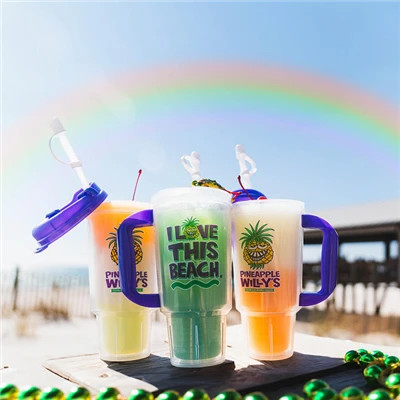
At the end of the day, the small water bottle cap is a perfect example of how consumer products are made. It’s not just about making something cheap—it’s about making something that works for everyone: the factory, the retailer, the driver, the hiker, and the planet. If you’re in the market for water bottles, we can help you sort through all the details, from cap sizes to materials to shipping. Reach out and let’s chat about your needs.
Fish Bowl Cups References:
- ASTM International. Standard Specification for Blow-Molded Polyethylene Terephthalate (PET) Bottles for Beverage Packaging, 2022.
- National Association of PET Container Resources (NAPCOR). 2023 Report on Packaging Trends and Material Efficiency for Plastic Bottles.
- Journal of Packaging Technology and Science. Structural Integrity of PET Bottle Necks Under Thermal Pressure Loads, Volume 36, Issue 4, 2020.
- Convenience Store News. 2022 Study on Consumer Purchase Preferences for Bottled Beverage Packaging.
- U.S. Environmental Protection Agency (EPA). Sustainable Packaging Guidelines for Small and Medium Manufacturers, 2021.
Charmlite Co., Ltd.
Charmlite Co., Ltd. is one of the most experienced water bottles manufacturers and suppliers in China. We are committed to providing high quality custom service and OEM&OEM service for global clients. We warmly welcome you to wholesale bulk industrial water bottles made in China here from our factory. Welcome to contact us for price list and product catalog.
Address: Unit1421&1422, Buynow Tech.Bldg, No.76 South HuBin Rd, Xiamen, China
E-mail: sales@charmlitecn.com
WebSite: https://www.charmlitedrinkware.com/
