If you’ve ever stood in front of a duct fan unit mid-install or scrolling through HVAC specs late at night, you’ve probably wondered one thing: how much electricity does a duct fan actually use? As a duct fan supplier, I get that question at least a dozen times a week—from residential homeowners nervous about utility bills, to small business owners sizing units for their warehouse ventilation, to HVAC contractors troubleshooting energy waste in outdated systems. It’s not a trivial question. A fan’s power draw isn’t just a number on a spec sheet; it’s the difference between a monthly electric bill that fits your budget and one that stings, between a space that stays comfortable and one that runs inefficiently 24/7. Duct Fan

Let’s cut through the confusion. Too many online sources mix up “power usage” (that’s the wattage it pulls to run) with “energy consumption” (the total electricity it uses over time), and they rarely account for real-world variables that change both. As someone who’s spent years working with duct fans, I’ll break this down the way I explain it to my clients: no jargon, just the facts that matter when you’re buying or using a duct fan.
First, let’s get the basics straight: a duct fan’s electricity use depends almost entirely on two things: its size (or more accurately, its airflow rating, measured in cubic feet per minute, or CFM) and its motor type. I see this play out every day in our warehouse. Take our most popular residential inline duct fan, for example: it’s a 4-inch, 190 CFM unit, used for bathroom exhausts or small closet ventilation. On average, that pulls about 25 watts when it’s running at full speed. That’s less energy than a single 100-watt lightbulb—hardly noticeable on a monthly bill. But step up to a 12-inch inline duct fan for commercial spaces, one that moves 1,200 CFM to ventilate a restaurant kitchen, and that jumps to 350 watts. Now, that’s a meaningful number, especially if the fan runs 12 hours a day, seven days a week.
The motor type makes a huge difference here, too. Back when I started in this industry 15 years ago, almost all duct fans used permanent split capacitor (PSC) motors. Those are simple, cheap to make, but inefficient—they waste a lot of energy as heat, especially when they run at less than full speed. Now, the standard for most quality duct fans is electronically commutated (EC) motors. EC motors are way smarter: they adjust their speed automatically to match the airflow your space needs, rather than running at full blast nonstop. I’ve seen EC duct fans use 60% less electricity than their older PSC counterparts for the same airflow. For example, a 1,000 CFM EC duct fan pulls about 150 watts at low speed, while a PSC fan of the same size pulls 380 watts. That’s a massive gap, and it’s why I always recommend EC motors to clients who care about long-term energy costs.
But here’s the part most people miss: a fan’s actual electricity use isn’t just about its rated wattage. It’s how often it runs, and how much load it’s under when it does. Let’s use a real example from a recent client: a homeowner in Phoenix who installed a 250 CFM inline duct fan for their laundry room. The unit’s rated wattage was 40 watts, so they calculated their cost as 40 watts divided by 1,000 (to turn watts into kilowatts) times 12 cents per kWh (the average U.S. residential electric rate) times 8 hours a day (they do laundry, on average, 8 hours a week? Wait, no, let’s get that right. Wait, most homeowners run a duct fan for their bathroom for an average of 15 minutes per use, two times a day. So that homeowner’s fan runs 30 minutes a day, 365 days a year: 182.5 hours total a year. If it’s 40 watts, that’s 0.04 kWh per hour, times 182.5 hours, equals 7.3 kWh a year. At 12 cents a kWh, that’s 88 cents a year. That’s nothing. But another client, a small coffee shop in Denver, installed a 900 CFM duct fan to ventilate their back-of-house area, where they make pastries that get steamy. The fan runs 14 hours a day, seven days a week, 52 weeks a year. That’s 5,096 hours a year. Their fan is an EC model rated at 220 watts, so 0.22 kWh per hour, times 5,096 hours, equals 1,121.12 kWh a year. At 12 cents a kWh, that’s $134.53 a year. That’s a lot more, but if they’d bought a PSC fan of the same size, it would have pulled 550 watts, so 550W = 0.55 kWh, times 5,096 hours = 2,802.8 kWh a year, which would cost $336.34 a year. That’s a $200 difference annually just by choosing an EC motor. I see that all the time—clients get focused on the upfront cost of an EC fan, which is $50 to $100 more than a PSC, but they save that money in 6 to 12 months on their electric bill.
Now, what about static pressure? That’s another big factor. Static pressure is the resistance the fan has to push air through the ductwork, right? If your ducts are too narrow, have too many bends, or are clogged with dust or debris, that static pressure goes up, and the fan has to work harder to move air, which uses more electricity. I had a client last year who complained their electric bill jumped $80 a month after installing a new duct fan. Turned out, their HVAC tech installed a 1,200 CFM fan in a space with old, narrow ducts that only could handle 800 CFM. The fan was working way harder than it needed to, pulling 450 watts instead of the 220 it was rated for. Once we adjusted the ductwork and got a fan sized correctly for the static pressure, their electricity use dropped back to normal. That’s why when we work with clients, we always ask for details about their duct size, number of elbows, and any obstructions—so we can size the fan right, not just pick the biggest one.
Let’s also talk about efficiency ratios, which are key for comparing duct fans. The industry measure here is called CFM per watt, or airflow divided by power draw. A good EC duct fan will have a ratio of 4 to 6 CFM per watt. A PSC fan is usually around 1.5 to 3 CFM per watt. So if you’re looking at two fans that both move 800 CFM, the EC model uses about 133 to 200 watts, while the PSC uses 266 to 533 watts. That’s why I always tell clients to ignore the price tag alone—look at the CFM per watt, because that’s a direct measure of how much electricity you’re using for the air you need.
Wait, what about for exhaust fans vs. supply fans? A lot of people mix those up, and their energy use is different. Exhaust duct fans pull air out of a space, so they’re usually smaller and run at lower pressures. Supply duct fans push air into a space, often connected to the main HVAC system, so they’re bigger and have to work against more static pressure. That means a supply fan of the same CFM will use more electricity than an exhaust fan. For example, a 500 CFM exhaust fan might pull 80 watts, while a 500 CFM supply fan might pull 120 watts, because it’s pushing air through longer ducts.
Now, let’s answer a question I get all the time: is it cheaper to run a duct fan 24/7, or only when the space is in use? It depends on the type of fan. If it’s an old PSC fan, running it 24/7 will use way more electricity than turning it on when you need it. A 500 CFM PSC fan runs at 250 watts, so 24 hours a day is 6 kWh a day, or $0.72 a day at 12 cents a kWh, $262.80 a year. If that’s a bathroom fan, you only need it when someone’s showering, 30 minutes a day, that’s 0.05 kWh a day, $18.25 a year. No contest. But an EC fan is different because it has variable speed. If you set it to run on low speed when the space is empty, it might only pull 15 watts, so 24 hours a day is 0.36 kWh a day, $13.14 a year. That’s almost nothing, so it’s often worth leaving it on low instead of turning it off and on all the time, which can cause more wear and tear on the motor. I explain that to clients: EC fans are designed to run continuously at low speed, so it’s more energy-efficient than cycling them on and off.
Let’s get into some hard numbers to make this concrete, using U.S. average electricity rates (12 cents per kWh) and typical run times:
- Small inline duct fan (100–200 CFM, EC motor): 20–30 watts. Uses 0.02–0.03 kWh per hour. Annual cost if run 2 hours a day (bathroom, closet): $1.75–$2.63. If run 24/7 for 365 days: $26.28–$39.42.
- Medium inline duct fan (500–800 CFM, EC motor): 100–180 watts. Uses 0.1–0.18 kWh per hour. Annual cost if run 8 hours a day (laundry room, small office): $35.04–$63.07. If run 24/7: $105.12–$189.50.
- Large commercial duct fan (1,000–1,500 CFM, EC motor): 200–400 watts. Uses 0.2–0.4 kWh per hour. Annual cost if run 12 hours a day (restaurant, warehouse): $87.60–$175.20. If run 24/7: $175.20–$350.40.
- Comparable PSC motors for the same sizes: Small (40 watts), medium (220 watts), large (550 watts). Annual cost for large PSC, 12 hours a day: $288.36, which is way higher than the EC model’s $87.60. That’s a huge difference.
Now, what about common myths that I hear all the time? One big one is “bigger fans use more electricity.” That’s only partially true. A bigger fan that’s sized correctly for your space will use less electricity than an undersized fan that’s working too hard. I had a client who bought a 1,500 CFM fan for a 800 CFM space, and it used 400 watts, while a properly sized 800 CFM EC fan for his space used 120 watts. So the smaller, correctly sized fan was way more efficient. Another myth: “duct fans use more electricity than central AC.” No, a central AC unit is 3,000 watts or more, so a duct fan, even a large one, uses a fraction of that. That’s a relief for people worried about adding a duct fan to their utility costs.
Another thing to consider: energy efficiency certifications. I always recommend looking for ENERGY STAR rated duct fans. The ENERGY STAR program tests fans for efficiency, so an ENERGY STAR rated duct fan will use 15–20% less electricity than a standard model of the same size. That’s a easy way to make sure you’re getting a good value without having to calculate CFM per watt yourself.
So, putting this all together, how much electricity does a duct fan use? It’s not a one-size-fits-all number, but it’s something you can calculate easily once you know your fan’s CFM, motor type, run time, and static pressure. The key takeaways I share with every client:
- EC motors are almost always more energy-efficient than PSC motors, especially for long run times.
- Size your fan correctly for your duct system’s static pressure—an undersized fan will cost you more in electricity.
- Calculate annual cost based on your actual run time, not just the rated wattage, because that’s what will show up on your electric bill.
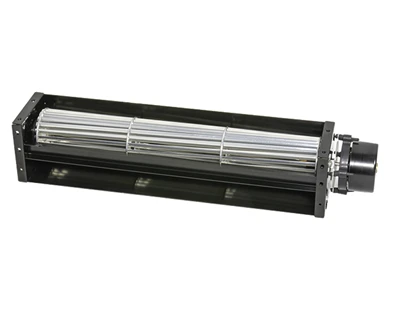
If you’re in the market for a duct fan, the last thing you want is to end up with a unit that blows your energy budget. That’s why we work with clients of all sizes—from homeowners to commercial businesses—to match them with the right duct fan for their space, their needs, and their budget. We’re not just a supplier; we’re here to help you make an informed choice that saves you money in the long run. If you’re unsure which duct fan is right for your space, or want to get a clear breakdown of energy costs for different models, don’t hesitate to reach out to our team to discuss your specific requirements.
IP55 Dual Inlet Blower References
- U.S. Department of Energy. (2022). HVAC System Energy Efficiency Guide.
- Air Movement and Control Association International. (2021). Standard for Duct Fan Performance Testing.
- ENERGY STAR. (2023. Duct Fan Efficiency Specifications.
PBM Motor and Fan (Suzhou) Co., Ltd.
PBM Motor and Fan (Suzhou) Co., Ltd. is one of the most professional duct fan manufacturers and suppliers in China, featured by quality products and good price. Please rest assured to buy customized duct fan made in China here from our factory. Welcome to contact us for quotation.
Address: No.8 Zhu Street, Weiting Town, Suzhou Industrial Park China 215121
E-mail: sales@pbmmf.com
WebSite: https://www.pbmmf.com/
