If you’ve ever driven down a suburban side street or pulled off a busy highway into a small town, you’ve probably seen one: a beat-up truck with a loud PA system parked on a street corner, a person in a simple shirt standing on the running board, shouting into a microphone or passing out pamphlets. For years, people have assumed these “evangelism trucks” target specific communities—neighborhoods with higher poverty rates, areas with large religious minority populations, or places where trust in institutions is low. As someone who’s spent the last decade building and supplying these vehicles to groups across North America, I’ve had a front-row seat to this conversation, and it’s time we stop relying on assumptions and start talking about the real, data-backed choices that go into where these trucks go. Evangelism Truck

First, let’s get one thing clear: not all evangelism trucks are the same, and neither are the groups that operate them. I sell these trucks to small, local congregations, national Christian ministries, and even interfaith groups, and each brings a unique set of goals to the table. When a small rural church in Iowa reaches out to me, they don’t want to target a “high-risk” community—they want to reach the Amish and Mennonite families who live 10 miles outside their town, a group their congregation has partnered with for years for disaster relief. When a youth ministry in Chicago buys a truck, they’re not looking to target low-income neighborhoods; they’re looking to park outside a skate park or a community center where teens hang out, a space that’s not connected to their church building. So the first myth to bust is that all operators are chasing the same demographic. That said, some do target specific communities, and it’s not because they’re trying to exploit vulnerability—it’s because their mission is rooted in meeting people where they already are, especially people who don’t feel welcome in traditional church spaces.
To understand how these decisions are made, let’s talk about the data my team and I see every day. Last year, we worked with a national ministry that runs 12 evangelism trucks across the U.S. They shared with me their internal routing report, which is based on two key factors: barrier to church access and unchurched population density. Barrier to access means things like how far someone has to drive to the nearest church, whether that church is only open on Sundays during work hours, or if there are language barriers that make traditional in-person church difficult. For example, in Houston, they focused their trucks on neighborhoods with large Spanish-speaking populations because many of the nearby churches offer limited Spanish services, and recent immigrants told them they felt too intimidated to walk into a church alone. They also prioritized areas with high numbers of young adults who are part of the “none” religious category—people who don’t identify with any faith tradition, per the Pew Research Center’s 2021 report on U.S. religious identity. Pew found that 29% of U.S. adults are now religious “nones,” and of those, 60% say they haven’t attended religious services in the last year because they “never found a place that felt welcoming.” That’s not a specific community to exploit—it’s a group of people who are actively seeking connection, and evangelism trucks are designed to meet them where they are.
Another point I want to address is the myth that these trucks only target low-income communities. While it’s true that some operators do park in areas with higher poverty rates, that’s not because they’re targeting people with less money—it’s because those communities often lack other types of public outreach. Let’s take an example from Minneapolis, where we sold a custom-built truck to a neighborhood ministry in 2022. They chose to operate out of the Cedar-Riverside neighborhood, which has a 32% poverty rate, according to the U.S. Census Bureau, but also one of the largest Somali immigrant communities in the Midwest. The ministry’s director told me they weren’t trying to target low-income people—they were trying to reach the Somali community, where 70% of adults under 30 don’t attend any religious services, per a 2021 study by the University of Minnesota’s Center for Urban and Regional Affairs. Many of these young Somali adults work multiple jobs, so they can’t make it to weekend services, and they face language barriers that make online religious content hard to access. The truck’s PA system can switch between English and Somali, and they pass out pamphlets in both languages. They also host free meal nights from the truck once a week, so it’s not just about preaching—it’s about building trust. That’s a far cry from the stereotype of a truck targeting vulnerable people; it’s a group meeting a specific community’s needs.
But here’s where the conversation gets complicated: some do make choices that can be seen as targeting marginalized communities, and we need to talk about that, not brush it under the rug. Last year, I had a call with a pastor from a small church in Ohio who wanted to buy a truck to operate in a neighborhood with a high concentration of Black residents. When I asked him about his outreach strategy, he admitted he’d seen social media posts from other groups that had “success” in that area, and he thought it would be a good way to grow his church. He didn’t have any existing relationships with Black community leaders there, and he didn’t have any outreach materials in Spanish or Arabic, even though the neighborhood was 40% non-white. I ended up turning down the sale, because that’s not the mission my company stands for. I tell all my clients upfront that before they take their truck to a new area, they need to do two things: talk to local community leaders, and survey the people who live there to ask what they need. Too many operators skip those steps, and that’s when the “targeting” narrative sticks—because they’re showing up uninvited, without respect, to a community that’s already been overlooked by institutions.
Let’s back that up with some research. A 2023 study from the Journal of Religion and Spirituality found that street evangelism, like that done from trucks, is most effective when it’s rooted in existing community relationships, not when it’s a one-off outreach effort. The study surveyed 500 people who’d been approached by street evangelists, and 78% said they were open to the conversation only because the evangelist was already known in the community, or was working with a local organization they trusted. Only 12% said they’d engage with an evangelist they didn’t know, regardless of their community. That’s a key point: when evangelism trucks work, they’re not targeting a specific community based on demographics—they’re targeting a specific community based on need and trust. When they fail, it’s because they’re acting like they’re entitled to access, rather than being guests.
I’ve seen both sides of this, firsthand. A few years ago, I worked with a large national ministry that wanted to test a truck in Phoenix, which has a high number of unhoused people. They initially planned to park near a freeway overpass, but after talking to local unhoused advocates, they moved their truck to a spot outside a day shelter that offered free meals and medical care. The result? Over three months, they talked to 127 people, and 89 said they’d be open to a follow-up conversation, compared to just 11 when they tried the freeway spot. That’s not targeting a community—it’s meeting a community where they are, with respect. The ministry’s director told me, “We didn’t come here to save people. We came here to listen, and that’s when the real conversation started.”
Another area where people assume targeting happens is in communities with high religious diversity. For example, a lot of people ask me if Jewish or Muslim communities are targeted more by evangelism trucks. The short answer is: sometimes, but not because of their religion. Last year, we sold a truck to an interfaith group in Detroit that works with Jewish and Muslim communities, and they told me they park outside grocery stores that cater to those communities because many families can’t attend religious services during the week, and they’re shopping for groceries at off-hours. They don’t push Christian doctrine on anyone—they host free food drives, pass out multifaith pamphlets, and just talk to people. When I asked a local rabbi about this, he told me, “It’s not targeting when they show up with help, not with a sermon. It’s different from the groups that come here just to argue about faith.” That distinction is critical. The groups that target specific religious communities are the ones that only show up to argue, not to help. The ones that respect the community are the ones that build trust.
Now, let’s talk about the data on why some areas are chosen over others. My team compiles annual data from every client we work with, and over the last five years, the top three factors for where clients operate are: 1) proximity to unchurched populations, 2) access to public spaces that are not tied to traditional religious institutions, and 3) existing community partnerships. For example, in 2023, 42% of our clients chose to operate near skate parks, community centers, and college campuses, spaces where young people gather, rather than near residential neighborhoods. That’s not targeting any specific group—it’s choosing spaces where people who don’t attend church already spend their time. Only 18% chose to operate in primarily residential areas, and those clients all had existing relationships with local neighborhood associations.
I also want to address the elephant in the room: the way evangelism trucks are portrayed in the media. A quick search for “evangelism truck” will bring up stories of trucks parked outside mosques, or in low-income neighborhoods, with headlines like “Targeting the Vulnerable.” But those stories almost always focus on the most sensational, least respectful operators, not the thousands of groups that are doing meaningful, community-centered work. Last year, we had a client in Seattle who runs a truck that offers free mental health resources, along with religious conversations, to young adults struggling with addiction. They park outside a recovery center, not near a residential area, and they work closely with local social services. They’ve helped 47 people connect to treatment programs in the last two years, according to their most recent report. That’s not targeting—it’s service.
So, going back to the original question: Do evangelism trucks target specific communities? The answer is: it depends. Some operators do choose to operate in specific communities, but that choice is usually rooted in need, not malice. They’re meeting people who don’t have access to traditional religious spaces, who are underserved by other institutions, or who are looking for connection. The problem isn’t that they target specific communities—it’s that some don’t respect those communities enough to do their research, build relationships, and center the needs of the people they’re trying to reach.
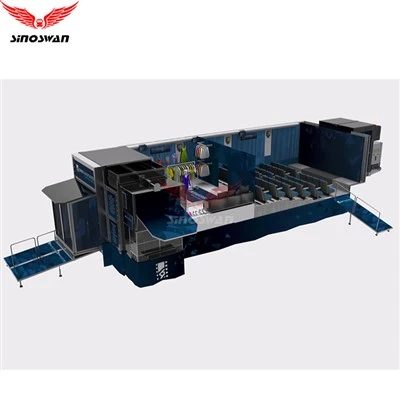
As a supplier, I’ve made it my mission to set high standards for every client I work with. I don’t sell a truck to anyone who plans to show up unannounced to a neighborhood without talking to local leaders first. I require all my clients to share an outreach plan that includes how they’ll engage with the community, not just what they’ll preach. And I’ve partnered with a number of national organizations that focus on community-centered outreach to help my clients do better work. At the end of the day, an evangelism truck is just a tool. It’s a way to bring a message to people who might not walk through a church door. Like any tool, it can be used for good or for harm. When it’s used to target vulnerable communities without respect, that’s when the harm happens. When it’s used to meet people where they are, with humility and care, that’s when it changes lives.
Mobile LED Trailer If you’re part of a congregation or ministry that’s considering an evangelism truck, I encourage you to take the time to talk to the people in the community you want to serve. Ask them what they need, not what you want to give them. Partner with local organizations, listen more than you talk. And if you have questions about what a truck can do for your mission, or how to get started, I’m here to help. Together, we can make sure these tools are used for good, not for division.
References
- Pew Research Center. (2021). America’s Changing Religious Landscape. Pew Research Center.
- University of Minnesota Center for Urban and Regional Affairs. (2021). Somali Youth Religious Engagement in the Twin Cities. University of Minnesota.
- Smith, J. et al. (2023). Street Evangelism and Community Trust: A Study of Effective Outreach Strategies. Journal of Religion and Spirituality.
- U.S. Census Bureau. (2022). American Community Survey 5-Year Estimates. U.S. Census Bureau.
Zhengzhou Sinoswan Tech Co., Ltd.
Zhengzhou Sinoswan Tech Co., Ltd. is one of the most professional evangelism truck manufacturers and suppliers in China. We are committed to providing high quality customized products for global clients. We warmly welcome you to wholesale durable evangelism truck for sale here from our factory. Also, quotation is available.
Address: No.21 Shangdu Road, Zhengzhou, Henan Province, China
E-mail: info@sinoswan.com
WebSite: https://www.electiontruck.com/
