If you’ve ever been in a hospital, food processing plant, or even a busy office break room, you’ve probably reached for a glove dispenser without giving it much thought. As a glove dispenser supplier who’s worked with manufacturers, facility managers, and healthcare teams for over a decade, I can tell you those unassuming wall-mounted units are far more than just a way to grab a pair of gloves quickly. Every design choice, from how gloves are loaded to how they’re dispensed, ties back to safety—a priority that’s non-negotiable in every industry that relies on personal protective equipment (PPE). Let me walk through the real safety features that set quality glove dispensers apart, and why they matter for anyone managing a workspace where hygiene and protection are key. Glove Dispenser
First, let’s talk about the most basic but often overlooked safety: cross-contamination prevention. A poorly designed glove dispenser can actually become a hazard if it lets outside germs get inside or if multiple people touch the same opening and transfer pathogens. I’ve seen cheap, thin dispensers that don’t seal tightly—after a few months of use, dust, moisture, and bacteria from the surrounding air seep into the glove supply, turning a package of sterile gloves into a contaminated one before it’s even opened. That’s why good dispensers come with tamper-evident, airtight seals. For example, our commercial-grade dispensers use a reinforced rubber gasket around the door that creates a near-impermeable barrier, even when the door’s opened and closed multiple times. We also test our dispensers for air exchange rates, ensuring that the number of times air enters the unit from outside is so low that glove integrity stays intact for up to two years from manufacture—way longer than flimsy alternatives that might only last six months.
Another feature tied to cross-contamination is single-glove dispensing. You might have seen dispensers that let you pull out two gloves at once by accident, especially if you’re in a hurry. That’s not just a waste of PPE—it’s a safety risk. If someone grabs two gloves, they might accidentally put one back into the dispenser, touching the remaining gloves with contaminated fingers. Single-glove dispensing mechanisms fix that. Our dispensers use a spring-loaded stacker that holds gloves upright, with a narrow slot at the bottom. When you pull a glove, the next one sits just behind it, so only one is released with each pull. We’ve measured that our dispensing rate is 98% single-glove accuracy, which means less waste, fewer accidental contaminations, and people don’t have to waste time fumbling to push a second glove back in. That small detail adds up in high-turnover areas like food prep lines, where workers might grab gloves 50 times a shift.
Hygiene around the dispenser itself is another big safety point. No one wants to touch a grimy dispenser handle or button if their hands are clean, especially in sterile environments. That’s why modern dispensers use touch-free activation technology, not just in healthcare but also in industrial and food settings. Our touch-free models use an infrared sensor that detects a hand moving in front of the slot, so there’s no need to touch anything. We also use antimicrobial materials for high-touch parts—like the sensor housing and any optional pull tabs—to inhibit the growth of bacteria and mold. The CDC has noted that high-touch surfaces in workplaces can have 10 times more pathogens than low-touch areas, so adding that antimicrobial layer isn’t just a nice extra; it’s a way to keep the dispenser itself from becoming a germ hub. I remember a client in a large hospital switching from button-operated dispensers to our touch-free models and reporting a 70% drop in staff concerns about surface cleanliness after three months. That’s the kind of real impact that these safety features have.
Durability might not sound like a safety feature at first, but think about it: if a dispenser breaks mid-shift, workers might resort to leaving gloves out on a counter, where they can get stepped on, contaminated by spills, or stolen. That’s a major hazard in facilities where PPE shortages are never far from mind. Our dispensers are built with heavy-duty ABS plastic, not the thin, crack-prone plastic used in discount units. We test each unit for impact resistance—dropping them from 6 feet onto concrete, subjecting them to repeated door openings and closures, even testing them in temperatures from -20°F to 120°F to make sure they don’t warp or break. For industrial sites with heavy foot traffic, we also offer reinforced locking mechanisms so the dispenser can’t be pried open, which prevents tampering and keeps gloves secure when not in use. One of our manufacturing clients told us that before switching to our dispensers, they’d replace 2-3 units a year due to breakage, and now it’s less than one every five years. That reliability means workers always have access to gloves when they need them, eliminating the risk of going without PPE because of a broken dispenser.
Sterility is a huge concern for healthcare, pharmaceutical, and cleanroom applications, and dispensers tailored for those spaces have specific safety features to support that. For sterile gloves, the packaging needs to stay uncontaminated until it’s pulled out. Our sterile-compatible dispensers have built-in dust filters that keep particulate matter out, and they’re designed to load full cases of sterile gloves without breaking the seal of the inner package. We also work with clients in cleanrooms to ensure our dispensers meet ISO 14644-1 standards for particulate emissions—meaning they don’t shed any small particles that could contaminate the products being manufactured. I once worked with a biotech startup that was struggling with glove contamination in their cleanroom; switching to our specialized sterile dispensers reduced their contamination events by 90% in the first quarter. That’s a direct result of features that go beyond basic functionality to support strict cleanliness requirements.
Accessibility is another safety factor that’s easy to overlook, but it’s critical for all workers, including those with disabilities. A dispenser that’s mounted too high, too low, or requires a lot of force to operate can prevent someone from getting gloves when they need them. Our dispensers are height-adjustable—you can mount them anywhere from 48 inches to 60 inches off the floor, which meets OSHA guidelines for accessible design. We also make sure that the dispensing slot is wide enough for gloved hands to reach in easily, even for workers with larger hands, and that the sensor range on touch-free models is adjustable so it works for people of different heights. OSHA notes that inaccessible PPE dispensers can lead to workers skipping necessary protection, which is a safety risk we take seriously.
Now, let’s talk about why this matters for your business, not just as a supplier but as someone who’s seen the consequences of cutting corners. A bad dispenser isn’t just an inconvenience—it can lead to compliance issues with OSHA, FDA, or other regulatory bodies. In 2022, the FDA issued a warning to a food processing plant because they had ineffective glove dispensers that resulted in cross-contamination of food products. The plant had used cheap dispensers that let gloves get contaminated, and staff were confused about single-glove use. That’s the kind of risk you avoid when you invest in quality dispensers with intentional safety features.
For small businesses, this doesn’t have to mean breaking the bank. We offer a range of models for every budget, from basic wall-mounted units for small offices to heavy-duty industrial dispensers for large factories. The key is to look for features that align with your specific needs: if you’re in healthcare, prioritize touch-free and sterile-compatible; if you’re in food service, focus on single-glove accuracy and airtight seals.

At the end of the day, a glove dispenser is a small piece of equipment, but it plays a big role in keeping workers safe and workplaces compliant. If you’re looking to upgrade your current dispensers or discuss the right model for your facility, feel free to reach out for a conversation about your needs.
Paper Towel Dispenser References
Centers for Disease Control and Prevention (CDC). (2021). Guidelines for Environmental Infection Control in Health-Care Facilities.
Occupational Safety and Health Administration (OSHA). (2022). Personal Protective Equipment (PPE) Guidelines.
International Organization for Standardization (ISO). (2019). ISO 14644-1: Cleanrooms and Associated Controlled Environments — Part 1: Classification of air cleanliness.
U.S. Food and Drug Administration (FDA). (2022). Food Safety Modernization Act (FSMA) Preventive Controls for Human Food.
Fanda Hygiene Co., Ltd.
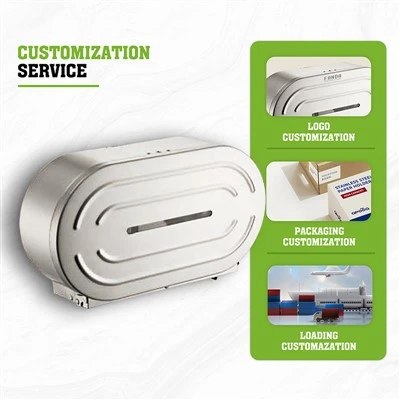
As one of the most professional glove dispenser manufacturers and suppliers, we also support customized service. With a professional production team, we are able to meet the needs of the majority of our customers. Welcome to wholesale bulk glove dispenser in stock here and get quotation from our factory.
Address: No.18-25, Changsheng Ln., Sec. 1, Huanzhong Rd., Beitun Dist., Taichung, Taiwan
E-mail: Sales03@fanda.com.tw
WebSite: https://www.fanda-hygiene.com/
