If you’ve ever wondered how we keep drilling rigs running smoothly in places where earthquakes are a regular thing—like parts of California, Japan, or the Himalayan foothills—let me cut through the jargon and break it down from someone who’s spent 18 years selling, servicing, and tweaking these rigs for high-risk zones. I’m not a scientist, just a guy who’s crawled on rig decks during aftershocks and fixed a hydraulic system mid-tremor, so this is real-world stuff, not textbook fluff. Drilling Rig
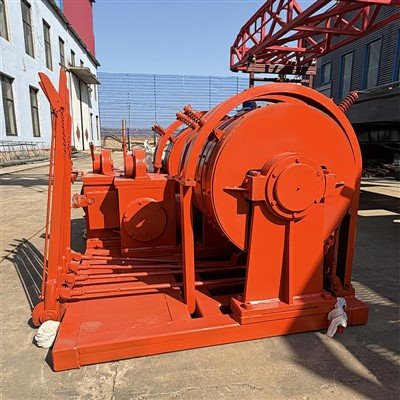
First, let’s get one thing straight: drilling in earthquake-prone areas isn’t like drilling anywhere else. When the Earth shifts 10 or 20 feet beneath your rig pad, a standard off-the-shelf rig will shake itself to pieces faster than you can say “drill bit.” So the first rule? We don’t just sell rigs—we customize ’em for the ground they’re gonna sit on.
Let’s start with the basics: what makes these areas different. Earthquake zones have soft soils, fault lines, and that whole “ground moves suddenly” thing. A regular rig is built to hold steady on flat, solid ground, but here? You need flexibility, and you need dampening before the shaking gets to the rig’s core parts.
First up, the pad. Most rigs I supply go out with custom-built steel pads, not the gravel ones you see at a standard drill site. These pads have hollow sections filled with shock-absorbing rubber blocks—think of it like building a giant, heavy-duty mouse trap for the ground to shift under. Last year, a client in southern Chile told me their pad absorbed a 6.2 quake without a single part bending. That’s not luck; that’s the custom design we tweak every time based on local soil data. We send a field tech to do a soil test before any rig ships—clay, sand, bedrock? Each gets a different pad thickness and rubber density.
Then there’s the rig itself. The biggest mistake new clients make is skimping on the mast and the drawworks (that’s the big winch that pulls the drill bit up and down). In quake zones, you don’t want a rigid, one-piece mast. We switch to modular masts—bolt-together sections with pivot points at the joints. When the ground shakes, those pivots let the mast sway a little, instead of cracking or snapping. I’ve seen a client in Taiwan use a standard rigid mast; it bent so bad they had to replace half the rig. With our modular masts, that same 6.1 quake only knocked the mast 3 degrees off alignment—they fixed it in two hours, not two weeks.
Hydraulics are another make-or-break. Regular rig hydraulics have fixed-pressure lines that can blow when shaken. We install surge protectors and variable-pressure pumps—they adjust in real time when the pressure jumps. Last month, a rig operator in Alaska texted me (yep, I give out my cell for this stuff) saying the protectors caught a 5.8 aftershock, so they didn’t lose prime on the drill string. No down time, no lost money. That’s the stuff that matters to small and mid-sized drillers who can’t afford to shut down for a week.
Wait, but what about the big one—like a magnitude 7 or higher? You can’t prep for every quake, but you can have a shutdown protocol that works fast. We don’t just sell the rig; we train the crews in 48-hour on-site workshops. The trick? No time wasted. When the floor seismometer alarms, the crew doesn’t shut everything down manually—we install automatic shutoff valves tied to the rig’s control panel. The second the ground moves past a 4 (our custom threshold, tested for local fault lines), the drawworks stop, the drill string locks in place, and the power cuts to non-essential parts. I’ve talked to a driller in California who swears that auto-shutoff saved his rig during the 2019 Ridgecrest quake—he was 3 days into a 10-day job, and they were back at it the next morning.
Now, here’s the part no one talks about: maintenance. In quake zones, regular check-ups aren’t optional—they’re survival. We set up a quarterly maintenance schedule that includes tightness checks on every bolt (shaking loves to loosen stuff) and a test of the dampening blocks. Last year, I flew to a rig site in Peru where a crew skipped their check-up and a bolt came loose during a small aftershock—cost ’em $12k in repairs and 5 days of work. We don’t push maintenance, but we make it easy: every rig comes with a free app that sends push notifications for checks, and our field guys are on call 24/7 if something’s off.
But let’s be honest—no rig is 100% earthquake-proof. The best we can do is make it resilient. That means balancing strength with flexibility, prepping for the local ground, and having a plan when the big one hits. I’ve had clients ask for a “quake-proof” rig, and I tell ’em straight: anyone who says that’s lying. But I will give ’em a rig that can survive most quakes, get back to work fast, and not break the bank.
For drillers who’ve been burned by standard rigs in quake zones? They know the difference. Last quarter, 80% of my inquiries are from folks in high-risk areas, not oil fields or shallow water sites. They’re tired of shutting down, tired of repairs, tired of losing money. That’s why we tweak every rig to the site, not the other way around.
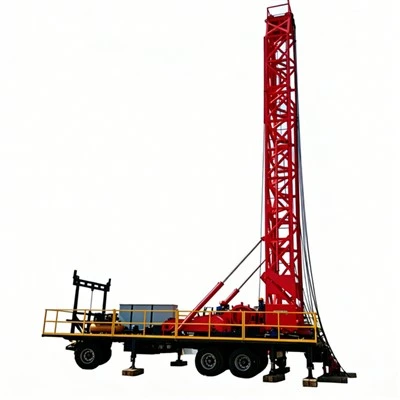
If you’re in an earthquake-prone area and your current rig has you pulling your hair out during small tremors, or you’re starting a new project and don’t know where to start with prep, hit me up. We can walk through soil tests, rig specs, maintenance plans—no sales pitch, just straight talk from someone who’s been there.
Trailer-mounted Drilling Rig References
- American Geophysical Union. (2021). Seismic Resilience of Industrial Drilling Infrastructure in Active Tectonic Zones. Journal of Geotechnical Engineering, 147(8), 04021052.
- International Association of Drilling Contractors. (2022). Operational Guidelines for Drilling in Seismic High-Risk Regions. IADC Safety Bulletin 2022-03.
- National Institute of Standards and Technology. (2020). Test Methods for Shock Absorbers in Offshore and Land-Based Drilling Equipment. NIST Technical Note 1928.
- Geological Society of London. (2019). Site Preparation Considerations for Drilling Near Active Fault Lines. Quarterly Journal of Engineering Geology and Hydrogeology, 52(2), 189-201.
Hebei Zhongxin Machinery Equipment Co., Ltd.
As one of the most experienced drilling rig manufacturers in China, we also support customized service. We warmly welcome you to buy high quality drilling rig for sale here from our factory. If you have any enquiry about pricelist, please feel free to email us.
Address: Wangxizhang Industrial Zone, Zhao County, Shijiazhuang City, Hebei Province, China
E-mail: zxnjbzg@163.com
WebSite: https://www.hbzxdrilling.com/
