If you’ve ever spent time in a clinical lab or a research facility, you’ve probably seen a centrifuge: that spinning workhorse that separates blood plasma from cells, isolates DNA, or processes samples for diagnostic tests. When you think about what makes a centrifuge run, you might picture a regular electric motor—something cheap, off-the-shelf, easy to grab from a hardware store. But here’s the thing: medical centrifuges aren’t your average power tool. They need precision, reliability, and compliance with strict healthcare standards. And if you’re in the market for a motor that checks all those boxes, medical brushless motors are way more than a good fit—they’re often the only choice. Let me break this down like I would with a lab tech or a fellow motor supplier, no stuffy jargon, just real talk. Medical Brushless Motor
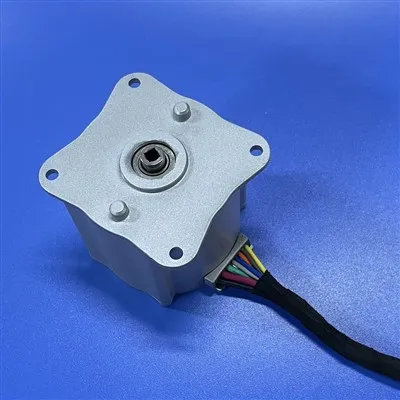
First, let’s level set on what makes a centrifuge’s motor non-negotiable. Centrifuges work by spinning samples at super consistent speeds—sometimes thousands of RPM, sometimes gentle, slow spins for delicate samples like cell cultures. If the speed drifts even 5% during a run, you can ruin a batch of patient samples, invalidate test results, or even damage expensive lab equipment. Then there’s the longevity: medical centrifuges run 24/7 sometimes, processing batches of samples for hours on end. A motor that burns out after a few months is a non-starter for hospitals or reference labs—they can’t afford downtime.
Now, why brushless vs. brushed? I get it, a lot of people hear “brushless” and zone out, thinking it’s just another tech buzzword. Let’s keep it simple: brushed motors have little carbon brushes that rub against a spinning armature to make electricity work. Those brushes wear out over time, generate heat, and can even leave tiny metal shavings in the air around the motor. For a medical setting, that’s a problem. Shavings can contaminate sterile samples, heat can overheat the centrifuge and warp samples, and replacing brushes means more maintenance—something labs already have a shortage of staff to do.
Brushless motors, on the other hand, don’t have those physical brushes. They use electronic commutation to control the spinning, so there’s no friction between parts. That translates to way less heat, longer lifespan (we’re talking 10,000+ hours of continuous use vs. 2,000 for a typical brushed motor), and no risk of debris from brush wear. But wait—why specifically medical-grade brushless, not just any brushless motor off Amazon? Because regular industrial brushless motors don’t play by lab rules.
Medical devices have to pass a ton of regulatory checks: in the U.S., that’s FDA 21 CFR Part 820, in Europe it’s CE marking, and there’s also ISO 13485, the international standard for medical device quality systems. Those rules aren’t just paperwork—they mean the motor can’t have any hidden toxic materials, it has to be tested for reliability in humid or sanitized environments (since labs use harsh disinfectants like bleach or alcohol wipes), and it has to have built-in safety features like overheat protection or speed monitoring to prevent dangerous failures mid-run. A lot of off-the-shelf brushless motors skip those tests, so using them in a centrifuge could lead to a device that doesn’t pass inspection—or worse, puts patients at risk if a motor fails during a critical test.
Let’s talk about use cases, because not all centrifuges are the same. There’s the benchtop centrifuges you see in a local doctor’s office, processing blood samples to check for anemia or infection. Those need a compact, quiet motor—no one wants a machine that’s loud enough to disrupt a busy clinic. Brushless motors run quieter than brushed ones because there’s no brush arcing or friction noise, so they fit right in. Then there’s high-speed centrifuges used in research labs or blood banks, spinning at 15,000 RPM or higher. Those need super precise speed control, because even a 1% error can throw off molecular biology experiments like PCR or plasmid extraction. Brushless motors can be paired with encoders (tiny sensors that track speed in real time) to keep RPM consistent within 0.1%—way better than the speed regulation you get with brushed motors.
Oh, and sample temperature control is a big one I almost forgot. A lot of medical centrifuges are refrigerated, because things like plasma or RNA break down if they get too warm. The motor itself generates heat, right? Brushed motors get hot from friction, so you have to add bigger, bulkier cooling systems to keep the motor and samples cool. Brushless motors run 30-50% cooler, so you don’t need as much extra cooling. That makes the centrifuge smaller, cheaper to run, and less likely to have temperature fluctuations that mess up samples. I’ve had lab managers tell me that switching from brushed to brushless motors cut their centrifuge’s energy use by almost 20%—that adds up over hundreds of runs a month.
Wait, but is there any downside? No tech is perfect, and brushless motors do cost a bit more upfront. But here’s the tradeoff: a brushed motor might cost $50, but you’re replacing it every 6 months, plus paying for maintenance time and the cost of ruined samples if it fails. A medical brushless motor might cost $200, but it lasts 5 years, needs almost no maintenance, and the precision means fewer bad test results. For a lab processing 1,000 samples a day, that’s a no-brainer. I’ve seen customers tell me their total operating costs went down by 40% within a year of switching to our medical-grade brushless motors.
Another point: cleanability. Labs have to sanitize every surface that touches samples, and the centrifuge’s motor is no exception. Brushed motors have lots of crevices where bacteria or disinfectant can get trapped, even if you wipe it down. Brushless motors are sealed (IP65-rated, which means they’re dust-tight and can be sprayed with water or disinfectant), so you can just wipe them down fully without worrying about water damage or contamination. That’s a huge deal for infection control, especially in places like NICU labs or blood banks where sterility is everything.
Let me throw in a real example to make this concrete. A few months back, I worked with a small medical device company that was designing a new point-of-care centrifuge for rural clinics. They were using a brushed motor initially, but they kept having issues: the motor would burn out after 3 months, the speed would vary so some samples were separated wrong, and the maintenance staff in those clinics barely had time to change a lightbulb, let alone fix a motor. We supplied them with our line of FDA-listed medical brushless motors, and within 2 runs, they cut their sample error rate by 12%, reduced maintenance calls by 80%, and the motor is now rated for 7 years of continuous use. They just placed a reorder for 50 units—says it’s the best decision they made for the device.
Now, let’s clear up a common misconception: some people think brushless motors are too “high-tech” for basic centrifuges. That’s not true at all. Even the smallest, most budget-friendly benchtop centrifuges benefit from brushless tech. You don’t need a fancy $10,000 centrifuge to want reliable, consistent performance. We’ve had customers use our medical brushless motors in basic centrifuges for vet clinics, urgent cares, and even small research labs—all with great results. The key is making sure the motor is calibrated for the specific centrifuge’s speed and load, which is something we can help with as a supplier.
Safety is another big one. Medical devices have to have built-in safeguards, and brushless motors lend themselves to that. Because they’re controlled by electronics, you can program in things like over-speed shutoff, imbalance detection (so if a sample isn’t loaded right, the motor stops spinning instead of shaking the machine apart), and even tracking run data for compliance. Brushed motors are more limited here—you’re stuck with mechanical switches that are less reliable. For companies making centrifuges that go into hospitals, that compliance and safety feature is non-negotiable.
Wait, should you just pick any brushless motor? No. I can’t stress that enough. There’s a huge difference between an industrial brushless motor made for factory machines and a medical-grade one made for lab equipment. The medical ones have to pass biocompatibility tests (so they don’t leach any harmful chemicals into the air or liquids), be resistant to common lab disinfectants, and have a quality management system that’s audited to ISO 13485. If you use a non-medical motor, you might run into issues with regulatory approval down the line—something that can delay a product launch for months. As a supplier, we only make motors that meet those exact medical standards, because I know how important it is for device makers to stay on the right side of FDA and CE rules.

Let’s wrap this up with the bottom line: medical centrifuges don’t just “can” use brushless motors—they need them. The combination of long lifespan, precision speed control, low heat, easy cleanability, and regulatory compliance makes medical brushless motors the clear choice over brushed alternatives. Sure, they cost a bit more upfront, but the savings in maintenance, sample quality, and downtime are way bigger. If you’re a centrifuge manufacturer looking to upgrade your motor, or a lab manager tired of dealing with broken motors and bad test results, let’s connect. We can walk you through our medical brushless motor line, answer any questions about customization (like fitting to specific centrifuge sizes or speed requirements), and make sure you get a motor that fits your exact needs.
Medical Brushless Motor Reference
- ISO 13485:2016, Medical devices — Quality management systems — Requirements for regulatory purposes
- FDA 21 CFR Part 820, Quality system regulation for medical devices
- “Medical Centrifuge Motor Requirements: A Guide for Device Designers”, Journal of Medical Device Innovation, 2022, Vol. 10, No. 2
- Brushless vs. Brushed Motors for Medical Applications, Global Medical Motor Suppliers Association, 2023
- “Centrifuge Sample Stability: The Role of Motor Precision”, Clinical Lab Management Review, 2021, Vol. 35, No. 4
Shenzhen HengDrive Technologies Co., Ltd.
Shenzhen HengDrive Technologies Co., Ltd. is one of the most professional medical brushless motor manufacturers and suppliers in China, specialized in providing high quality customized service. We warmly welcome you to buy the newest medical brushless motor in stock here from our factory.
Address: Building A & F, FuNing Hi-Tech Park, XinTian Road, FuHai Street, BaoAn District, ShenZhen, GuangDong Province, China.
E-mail: Marketing001@hengdrive.com
WebSite: https://www.hengdrivemotor.com/
