Hey there! I’m a supplier of sintered fibre felt material and filters. Today, I wanna talk about something super interesting: the impact of fluid viscosity on the filtration performance of sintered fibre felt filters. Sintered Fibre Felt Material and Filter

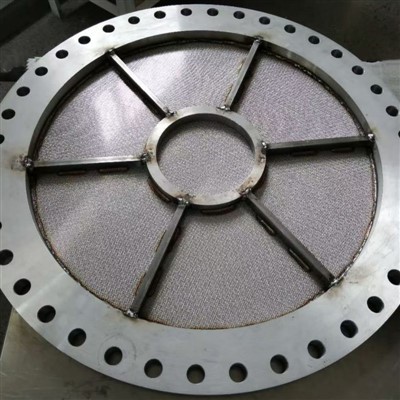
Let’s start with a bit of background on sintered fibre felt filters. These filters are pretty awesome. They’re made by sintering metal fibres together, creating a porous structure. This structure is great for filtering all sorts of fluids, from oils to gases. The pores in the felt can trap particles of different sizes, making it a very effective filtration solution.
Now, let’s get into fluid viscosity. Fluid viscosity is basically how thick or thin a fluid is. Think of honey and water. Honey is thick and has a high viscosity, while water is thin and has a low viscosity. When it comes to filtration, the viscosity of the fluid can have a huge impact.
How Viscosity Affects Flow Resistance
One of the main ways fluid viscosity affects the filtration performance of sintered fibre felt filters is through flow resistance. When a fluid with high viscosity passes through the filter, it has a harder time moving through the pores. This is because the thick fluid molecules are more likely to stick to the walls of the pores and to each other. As a result, the flow rate of the fluid through the filter decreases.
For example, if you’re using a sintered fibre felt filter to filter a thick oil, you might notice that the oil takes a long time to pass through the filter. This is because the high – viscosity oil creates a lot of resistance as it moves through the tiny pores in the felt. On the other hand, if you’re filtering a low – viscosity fluid like gasoline, the flow rate will be much higher because the fluid can move through the pores more easily.
Impact on Particle Capture Efficiency
Viscosity also affects the particle capture efficiency of sintered fibre felt filters. In a high – viscosity fluid, the particles are more likely to be carried along by the fluid flow rather than being captured by the filter. This is because the thick fluid can act as a sort of cushion, preventing the particles from coming into contact with the filter fibres.
Let’s say you have a filter that’s designed to capture small particles in a fluid. If the fluid has a high viscosity, the particles might just slide past the filter fibres without getting trapped. However, in a low – viscosity fluid, the particles are more likely to collide with the filter fibres and get captured. So, in general, the particle capture efficiency of a sintered fibre felt filter is higher for low – viscosity fluids.
Pressure Drop and Viscosity
Another important factor is the pressure drop across the filter. Pressure drop is the difference in pressure between the inlet and the outlet of the filter. When a fluid passes through a filter, there’s always some resistance, which causes a pressure drop.
In the case of sintered fibre felt filters, the pressure drop is directly related to the viscosity of the fluid. As the viscosity of the fluid increases, the pressure drop across the filter also increases. This is because the high – viscosity fluid requires more energy to move through the filter pores.
If the pressure drop gets too high, it can cause problems. For example, it might require a more powerful pump to push the fluid through the filter, which can increase energy consumption and operating costs. In some cases, a very high pressure drop can even damage the filter.
Filter Lifespan
The viscosity of the fluid can also affect the lifespan of the sintered fibre felt filter. In a high – viscosity fluid, the filter is more likely to clog up quickly. This is because the thick fluid can carry more dirt and particles, and it’s harder for these particles to pass through the filter. As a result, the particles build up on the filter surface and inside the pores, reducing the filter’s effectiveness over time.
On the other hand, in a low – viscosity fluid, the filter is less likely to clog because the fluid can easily carry the particles through the filter. This means that the filter can last longer and require less frequent replacement.
Practical Considerations for Suppliers
As a supplier of sintered fibre felt material and filters, we need to take these factors into account when working with our customers. When a customer comes to us looking for a filter, we need to ask about the viscosity of the fluid they’ll be filtering. This will help us recommend the right type of filter with the appropriate pore size and structure.
If the customer is filtering a high – viscosity fluid, we might recommend a filter with larger pores to reduce the flow resistance and pressure drop. We might also suggest a filter with a more open structure to prevent clogging. For low – viscosity fluids, we can offer filters with smaller pores to achieve a higher particle capture efficiency.
Real – World Examples
Let’s look at a couple of real – world examples. In the automotive industry, engine oil is a fluid with relatively high viscosity. Sintered fibre felt filters used in oil filtration systems need to be designed to handle this high viscosity. These filters are usually made with a larger pore size to allow the oil to flow through without creating too much pressure drop.
In the chemical industry, some solvents have very low viscosity. Filters used to clean these solvents can be designed with very small pores to capture even the tiniest particles. This helps to ensure the purity of the solvent and the quality of the final product.
Tips for Customers
If you’re a customer looking to buy a sintered fibre felt filter, here are some tips. First, make sure you know the viscosity of the fluid you’ll be filtering. This is crucial information that will help you choose the right filter. Second, consider the operating conditions, such as temperature and pressure. Viscosity can change with temperature, so it’s important to take this into account.
Finally, don’t be afraid to talk to a supplier. At [Your Position] at our company, we’ve got a lot of experience in this area. We can help you understand how the viscosity of your fluid will affect the performance of the filter and recommend the best solution for your needs.
Contact for Purchase
Wedge Wire Filter Screen If you’re interested in our sintered fibre felt materials and filters, or if you have any questions about how fluid viscosity might impact the filtration performance in your specific application, we’d love to hear from you. Just reach out, and we can start a conversation about your requirements. We’re always here to help you find the best filtration solution for your project.
References
- Brown, R. C. (2018). Filtration and Separation Handbook. Elsevier.
- Smith, J. D. (2019). Fluid Mechanics: An Introduction. Wiley.
- Chen, L. (2020). Advances in Sintered Fibre Materials for Filtration. Journal of Materials Science.
Henan Easy Filter Equipment Co., Ltd.
As one of the leading sintered fibre felt material and filter manufacturers and suppliers in China, we offer a wide range of products with superior quality. Please rest assured to buy advanced sintered fibre felt material and filter from our factory. We also accept customized orders.
Address: Apartment No.1, Building No.2, Zhengshang Jinyushijia, Xinzhong Street, Xinxiang, Henan, China.
E-mail: vivian@easyfiltertech.com
WebSite: https://www.easyfilter-china.com/
