If you’ve ever walked through a commercial dairy processing plant, you’ve probably passed rows of large, stainless steel vessels tucked away in a quiet corner, humming softly as they blend milk, cream, flavorings, and other ingredients. If you’ve wondered what those are, you’re looking at a closed dairy mixing tank—one of the most underrated yet critical pieces of equipment in dairy production. As a supplier who’s worked with dairies across North America for over a decade, I’ve seen firsthand how a well-designed closed mixing tank isn’t just a container; it’s the backbone of consistent, safe dairy products that make their way to grocery store shelves. Let me break down exactly what a closed dairy mixing tank is, how it works, and why choosing the right one matters for your operation. Dairy Mixing Tank
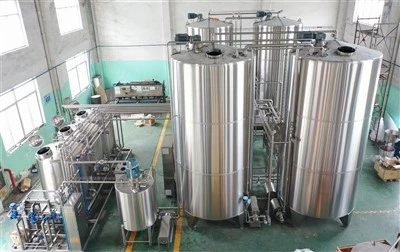
First, let’s start with the basics: a closed dairy mixing tank is a sealed, stainless steel vessel purpose-built for mixing dairy products, from liquid milk and cream to yogurt bases, ice cream mix, flavored milk, and even specialty products like condensed milk. What sets it apart from an open bucket or even a standard mixing vat is its sealed design and dairy-specific construction—two details that make it non-negotiable for commercial production. Unlike old open vats that were prone to contamination from dust, pests, or airborne bacteria, a closed tank is designed to maintain a hermetic (airtight) seal during operation, which is key for food safety. It’s also made of food-grade 304 or 316 stainless steel, a material that resists corrosion, is easy to sanitize, and doesn’t leach chemicals into the dairy products it holds—something non-stainless alternatives can’t match.
Now, let’s talk about the core features that make a closed dairy mixing tank work, because not all tanks labeled “dairy mixing” are created equal. First, the seal system: most modern tanks use a combination of gasketed lids, pressurized air locks, and even CIP (Clean-in-Place) port seals to keep outside contaminants out. I’ve seen too many smaller dairies cut corners here, using cheap rubber gaskets that degrade after a few sanitization cycles, leading to small leaks. Those leaks might seem minor, but they let in bacteria that can spoil a full batch of ice cream mix—costing thousands of dollars in wasted product and production time. A proper closed tank will also have a pressure relief valve, which is important if you’re heating or cooling products inside: it prevents the tank from building up too much pressure (which can warp the vessel) or sucking a vacuum when cooling (which can collapse thin stainless steel walls).
Next, the mixing system. Dairy products have unique properties: whole milk is thin, but a yogurt base with added stabilizers is thick and viscous, and ice cream mix has fat particles that need to be evenly distributed without breaking them down. Closed mixing tanks use a range of impellers (the blades that do the mixing) to handle these different consistencies. For thin liquids, a high-shear impeller works well to blend in flavorings or vitamins evenly. For thicker products, a anchor impeller or a helical ribbon impeller is better—it scrapes the sides and bottom of the tank to prevent product from burning during heating and ensures no lumps form. I always tell customers to match the impeller to their product: a high-shear impeller meant for milk will ruin a batch of thick yogurt, leaving it with a grainy texture. That’s why a good supplier won’t sell you a one-size-fits-all tank—they’ll ask what products you make to customize the mixing system.
Temperature control is another key feature of closed dairy mixing tanks. Many dairy products need to be heated (to pasteurize, blend in ingredients, or rework frozen mix) and cooled (to stop bacterial growth, prepare for fermentation, or store the final product). Closed tanks have jacketed walls—meaning a layer between the inner tank and outer shell where hot or cold water circulates—so you can heat or cool the product evenly from all sides. An open vat would only heat from the bottom, leading to hot spots that can scorch milk and create off-flavors. Some tanks even have internal coils for extra temperature control, especially for small-batch operations that need precise heat adjustment. I once worked with a craft yogurt maker who switched to a closed tank with jacketed temperature control; before that, their yogurt had inconsistent texture because they couldn’t keep the heat even during fermentation. After the switch, their batch success rate went up 20%—a huge win for a small business.
Now, let’s talk about the safety and compliance side. The dairy industry is heavily regulated by food safety standards like the FDA’s Food Safety Modernization Act (FSMA) and 3-A Sanitary Standards, which are specifically designed for equipment used in food processing. A closed dairy mixing tank isn’t just a good idea—it’s a requirement for any commercial dairy operation that wants to sell products across state lines or internationally. Why? Because the sealed design reduces the risk of microbial contamination, which is the leading cause of foodborne illness from dairy products. Open tanks are banned in many modern processing plants because they can expose products to Listeria, Salmonella, and other bacteria. Also, closed tanks with CIP systems make sanitization faster and more effective: you can pump a sanitizing solution through the tank’s internal pipes and impellers without taking it apart, which saves time between batches and reduces labor costs.
But here’s the thing: a closed dairy mixing tank isn’t a set-it-and-forget-it piece of equipment. It’s an investment, and how you operate it affects its performance and lifespan. For example, after each batch, you need to properly clean the gaskets and seal—food residue left on the seal can grow bacteria that contaminate the next batch. I’ve seen dairies use harsh chemical sanitizers that eat away at stainless steel over time, leading to pitting that’s impossible to clean properly. A good supplier will not only sell you the tank but also provide training on operation, maintenance, and sanitization to help you get the most out of your investment.
So, who needs a closed dairy mixing tank? It’s not just for big corporate dairies—craft cheese makers, small-batch yogurt producers, ice cream manufacturers, and even specialty milk producers all benefit. If you’re making flavored milk, for example, an open tank might blend the vanilla syrup unevenly, leading to some sips being too sweet and others not sweet enough. A closed tank with a high-shear impeller will distribute the syrup consistently, so every carton of milk tastes the same. For cheese, a closed tank can mix rennet with milk evenly, which is critical for curd formation—too much rennet in one spot can make the cheese rubbery, too little can make it not set properly.
Now, let’s address a common question I get: is a closed tank worth the extra cost compared to an open vat? It’s a fair question, and the answer depends on your production goals. An open vat is cheaper upfront, but it’s more prone to contamination, requires more labor to clean, and has shorter lifespan. A closed tank has higher initial cost, but it reduces product waste, complies with regulations, and can handle higher production volumes. Over time, the savings from not having to throw away spoiled batches and faster cleaning times add up. For a dairy that produces 10,000 gallons of product a month, a closed tank can save tens of thousands of dollars a year in waste and labor—far more than the upfront investment.
As a supplier, I don’t just sell tanks—I work with dairies to find the right fit. I’ve helped small startups who need a 500-gallon closed tank for their first production run, and large dairies who need custom 10,000-gallon tanks with automation features that let you monitor temperature and mixing speed remotely. The key is understanding your specific needs: what products do you make, what’s your production volume, what space do you have in your processing plant, and what regulatory requirements you need to meet. A good supplier will take the time to ask these questions, not just push a tank off the shelf.
If you’re in the dairy industry and looking to upgrade your mixing equipment, or you’re starting a new dairy business and need to invest in your first mixing tank, a closed dairy mixing tank is one of the most important decisions you’ll make. It’s not just a vessel—it’s a tool that ensures your products are safe, consistent, and compliant, and that your production runs smoothly. Don’t make the mistake of cutting corners on open vats or cheap equipment; the cost of contamination and inconsistent product is far higher than the cost of a high-quality closed mixing tank.
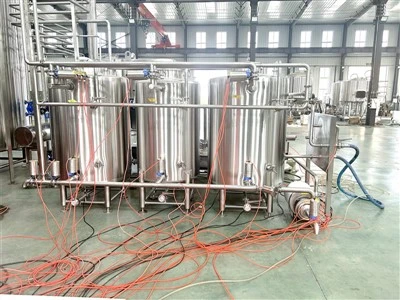
If you have questions about closed dairy mixing tanks, need a custom quote, or want to discuss how to match a tank to your specific dairy operations, reach out to us to set up a consultation. We’ll walk you through the features, help you understand the best options for your products, and make sure you get equipment that works for your business, not against it.
Milk Buffer Tank References
- 3-A Sanitary Standards, Inc. “Standard for Mixing Tanks for Dairy Products.” 3-A SSI, 2022.
- U.S. Food and Drug Administration. “Food Safety Modernization Act (FSMA) for Dairy Facilities.” FDA, 2021.
- International Dairy Federation. “Mixing Technologies for Dairy Processing: Best Practices.” IDF, 2020.
- Stainless Steel Industry Association. “Stainless Steel for Food Processing: Selection and Maintenance Guidelines.” SSIA, 2019.
Shandong Chenma Machinery Co., Ltd.
Shandong Chenma Machinery Co., Ltd. is one of the most professional dairy mixing tank manufacturers and suppliers in China. As we have world-leading production equipment and strong manufacturing capabilities, we warmly welcome you to buy high quality dairy mixing tank made in China here from our factory. For price consultation, contact us.
Address: No.1666 Xinluo Street, Jinan City, Shandong
E-mail: admin@sdchenma.com
WebSite: https://www.chenmadairy.com/
