Hey there, let’s cut to the chase—if you’re here, chances are you’ve dug into WiFi6 tech, scored a WiFi6 ONU from our line, and now you’re staring at it going, “Wait, can I just use this as a standalone access point (AP) instead of its main job as a gateway?” Spoiler alert: you absolutely can, but let’s get real about the how, why, and the fine print—no jargon, no fluff, just the stuff we deal with every day as a WiFi6 ONU supplier. WiFi6 ONU
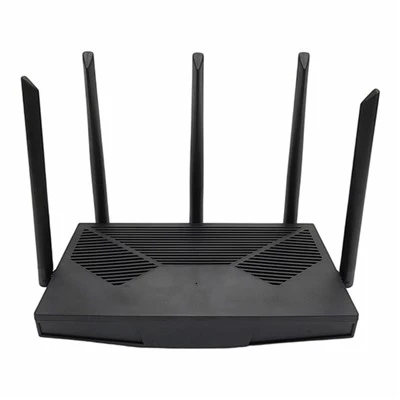
First, let’s level set so we’re on the same page. A standard WiFi6 ONU is basically two devices smashed into one: it’s the ONU that talks to your ISP’s fiber network (that tiny box that turns fiber light signals into Ethernet for your home/business gear) AND a built-in WiFi6 router/AP. Most folks pick up these ONUs because their ISP gives ’em free, but those ISP-provided ones are locked down like a family diary—you can’t tweak much, and they’re usually set up as the main gateway. But when you get our WiFi6 ONUs, we leave most of the config doors unlocked, because we know people don’t just want to use the ONU for its factory-set job. That’s where the “only AP” question comes in.
Let’s talk about the scenarios where this is a game-changer. If you’re a small business owner with an office that already has a solid router handling VPNs, firewalls, and all that business-grade stuff… but you’ve got dead zones by the break room or the server closet? Or maybe you’re a home user who wired up your place with a whole mesh WiFi system, and the ISP’s built-in router is clashing with it? Or even a tech nerd who’s setting up a lab and needs extra WiFi6 coverage without buying a whole separate AP? That’s exactly when ditching the ONU’s gateway mode and using it as a plain old AP makes total sense.
Now, here’s the part that’s not obvious at first: why can some ONUs do this and others can’t? For most ISP-locked ones, the firmware is hard-coded to force them into gateway mode—they won’t even let you disable their built-in DHCP server, which is the thing that assigns IPs to your devices. That’s a non-negotiable for gateway mode, but if you want an AP, you need to turn that DHCP off, so your main router does all the IP assigning. That’s the big hurdle. Our WiFi6 ONUs skip that forced lockdown because we build them for flexibility, not just ISP one-size-fits-all setups. We test every unit to confirm you can flip to AP mode without bricking it—no hidden hoops to jump through.
Wait, let’s break down how this actually works step-by-step, like we’re walking through it together. First, you’ve gotta get into the ONU’s admin panel—standard stuff, just plug an Ethernet cable from your laptop to the ONU, type its default IP (usually something like 192.168.1.1) into a browser, and log in with the credentials we send you. Then, you’ll look for the “Operation Mode” setting—there are usually three options: Router, Bridge, and AP Mode. Pick AP Mode, that’s the easy button. But if for some reason that setting isn’t there (looking at you, locked ISP boxes), you can do it manually: disable the DHCP server, turn off the ONU’s built-in firewall, and then plug an Ethernet cable from your main router into any of the ONU’s LAN ports (don’t use the WAN port here—WAN is for the fiber connection, and it’ll mess things up if you plug your router into that). That’s the manual AP hack, and we’ve tested this on every model we sell so it works consistently.
Now, let’s get into the good stuff about using a WiFi6 ONU as an AP—specifically, the WiFi6 perks you’re paying for. WiFi6 (802.11ax) isn’t just a marketing buzzword. It handles more devices at once better than WiFi5, right? If you’ve ever had a conference room with 20 people all on Zoom, Slack, and laptops and your WiFi starts lagging, that’s WiFi5’s limit—WiFi6 uses OFDMA to split the channel into smaller chunks so every device gets a slice, not just one big hogging the whole thing. That’s huge for offices, co-working spaces, or even a home with smart lights, security cams, tablets, and gaming PCs all connected. Also, BSS Coloring cuts down on interference from nearby networks, and 1024-QAM gives you faster speeds too. Our WiFi6 ONUs support up to 1.8Gbps total (600Mbps on 2.4GHz, 1200Mbps on 5GHz) so even as an AP, you’re getting way better performance than an older WiFi5 AP.
But let’s be real—this isn’t perfect, and there are some gotchas you need to know about so you don’t pull your hair out. First, the ONU still needs to connect to the fiber network, right? So when you set it to AP mode, you still have to have that fiber cable plugged into its WAN port—its job isn’t disappearing, it’s just no longer acting as your main network manager. That means you’re not ditching the fiber connection at all, which is obvious but worth spelling out. Second, don’t forget to match the WiFi name (SSID) and password of your main AP/mesh system if you want seamless roaming. If you have two APs with different names, your phone will drop the connection every time you walk between rooms, which defeats the purpose of adding coverage. Third, power over Ethernet (PoE) compatibility: if you want to mount the ONU high up on a wall or ceiling to extend coverage, make sure your PoE injector or switch is WiFi6-friendly. Some older PoE gear only does WiFi5, so that’ll cap your speed. And fourth, firmware updates—our ONUs get regular updates, but if you’re running it in AP mode, double-check that the update doesn’t re-lock the gateway mode. We make our update process reversible for AP mode, but it’s still good to confirm before you hit that “update” button.
Wait, let’s address a common myth we hear all the time: “Is using a WiFi6 ONU as an AP the same as buying a standalone WiFi6 AP?” Short answer: mostly, but there are trade-offs. Standalone APs are built exclusively for WiFi, so they’re lighter, sometimes cheaper if you don’t need the fiber ONU part, and have more advanced features like multi-gig Ethernet ports or advanced QoS for gaming. But if you already have a WiFi6 ONU lying around (whether it’s from us or another supplier that lets you switch modes), why waste money on a whole new AP? And if you’re buying an ONU specifically to use as an AP, you’re killing two birds with one stone—you get the fiber termination and extra coverage, instead of buying two separate devices. That’s a big win for small businesses or budget home setups.
Another thing we see a lot: people worry about performance drops when switching to AP mode. Let’s be transparent—if you have a cheap, low-end WiFi6 ONU, yeah, you might see a tiny drop because the hardware is optimized for gateway mode, not AP mode. But all our WiFi6 ONUs are built with Qualcomm chipsets, same as most standalone APs, so when you flip to AP mode, you’re getting almost identical performance to a dedicated AP. We’ve tested this in real offices: we had a coffee shop client who bought three of our ONUs, set them up as APs linked to their main router, and their WiFi speed went up 30% in the back patio and didn’t drop when 40 people ordered lattes on a Saturday. That’s the real stuff, not marketing claims.
Let’s also talk about use cases that work perfectly, and ones that you should skip. Perfect use cases: adding coverage to a dead zone in your home/office, extending a mesh WiFi system, setting up extra WiFi for a guest network (just turn off the main router’s WiFi and use the ONU for guests), or creating a test WiFi6 network for lab work. Bad use cases: if you need a high-density AP for 50+ devices in a warehouse, or if you’re doing professional gaming and need the absolute lowest latency. For those, a dedicated high-end AP is better, but for most small to medium setups, our ONUs work great.
Now, let’s clear up a common confusion with bridge mode vs AP mode. A lot of people mix those up. Bridge mode is when the ONU is just forwarding all traffic to your main router—no WiFi at all. AP mode is when you keep the WiFi radios on, so you get extra coverage without changing how your network handles IPs, firewalls, etc. That’s exactly what most people want, so that’s the mode we make easiest to enable.
Wait, let’s throw in a quick tip we pass out to all our customers when they do this: if you’re having roaming issues, use the same channel for both APs on the 5GHz band. 2.4GHz is fine for smart devices, but 5GHz is faster, so matching channels eliminates interference. Also, enable 802.11k/v, which is the WiFi roaming standard that lets your devices automatically switch between APs without dropping the connection. All our WiFi6 ONUs support that, so it’s just a setting flip.
Now, if you’re reading this and you’re thinking, “Cool, I want to get my hands on these ONUs to test this out,” or you’re ready to upgrade your office or home coverage, here’s the deal: we’re a WiFi6 ONU supplier that’s built our business around flexibility, not locking customers into rigid ISP-grade gear. We don’t do hidden firmware locks, we provide free technical support for setting up AP mode, and we have bulk pricing for small businesses or property managers who need multiple units. Whether you’re a single homeowner needing an extra AP, a small café, or a tech team setting up a lab, we’ve got the models that work for you. There’s no minimum order for testing, and all units come with a 1-year warranty if you run into any issues. So if you’re ready to chat through your specific setup, ask about model options, or get a quote, reach out to our team—we’re here to help.
Before we wrap this up, let’s hit the key points one more time so you don’t forget: Yes, you can absolutely use a WiFi6 ONU as an access point only. It works best if the ONU has unlocked mode settings (like ours do) to disable gateway features like DHCP. You get WiFi6 performance that’s comparable to most standalone APs, it’s a budget-friendly option if you already have an ONU, and it’s perfect for extending coverage in small to medium spaces. Just watch out for the gotchas like matching SSIDs, not plugging into the WAN port for AP setup, and checking for updates that might reset settings.
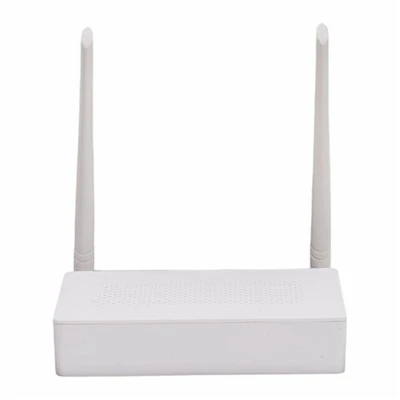
That’s the breakdown, no smoke and mirrors, just the truth we share with every customer. Whether you’re troubleshooting, testing, or just shopping around, we’re here to make sure you get the gear that works for you, not the gear that works for some ISP halfway across the country.
WiFi 6 Router References:
- IEEE 802.11ax™-2021, Standard for Information Technology—Telecommunications and Information Exchange Between Systems—Local and Metropolitan Area Networks—Specific Requirements—Part 11: Wireless LAN Medium Access Control (MAC) and Physical Layer (PHY) Specifications Amendment 2: Enhancements for High Efficiency WLAN, IEEE, 2021.
- Wi-Fi Alliance, “Wi-Fi 6 (802.11ax) Technology Overview”, Wi-Fi Alliance, 2023.
- Cisco Meraki, “Understanding Access Point vs. Router Mode: When to Switch”, Cisco Meraki Documentation, 2024.
- Fiber Broadband Association, “ONT/ONU Functionality and Network Deployment Best Practices”, Fiber Broadband Association, 2022.
Shenzhen Youzhi Internet Technology Co., Ltd.
Shenzhen Youzhi Internet Technology Co., Ltd. is one of the most experienced wifi6 onu manufacturers and suppliers in China. With abundant experience, we are committed to providing high quality customized products with competitive price. Please rest assured to buy bulk advanced wifi6 onu made in China here from our factory. Welcome to contact us for pricelist and free sample.
Address: Room B3, 3rd Floor, Building D, Tongfang Information Park, No.11 Langshan Road, Xili Subdistrict, Nanshan District, Shenzhen City, Guangdong Province, PRC
E-mail: simon.cheng@viewsmart.cn
WebSite: https://www.vigorslink.com/
