Hey folks, if you’ve been scrolling through urban delivery streets lately, you’ve probably seen those boxy, low-speed electric delivery cars (LSEDCs) zipping around—no honking, no fumes, just quiet. As someone who’s been in the game supplying these little workhorses for the past 7 years, I get this question all the time: “Can these things actually carry heavy loads, or are they just toys for small packages?” Let’s cut the jargon, skip the fluff, and break this down like I would with a new client who’s weighing their fleet options. Low-speed Electric Delivery Car
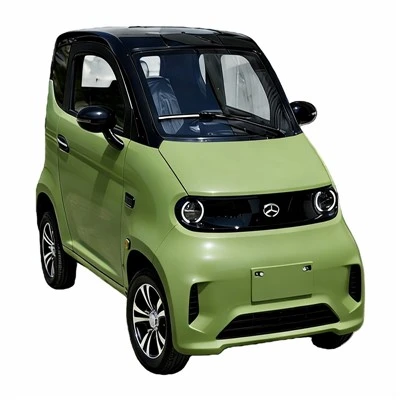
First, let’s get one thing straight: “low-speed” here is not a limitation on strength—it’s a design rule, not a flaw. Most cities slap a 25 mph (40 km/h) speed cap on these vehicles for urban safety, which means we can build them with way sturdier components than a tiny neighborhood EV golf cart. But let’s talk loads, because that’s the real meat. What counts as a “heavy load” for a delivery car? For context, a standard courier van might haul 1,500 lbs (680 kg) of stuff, but in last-mile delivery, most stops are tight—parking spots are scarce, navigating bike lanes is a must, and you’re not usually hauling 50 giant pallets. For us, the sweet spot for urban delivery is between 1,000–2,200 lbs (450–1,000 kg), and that’s not a number we pull out of thin air.
Let’s talk about the build. Our current model, for example, has a reinforced steel chassis, not the flimsy aluminum frames you see on some cheap LSEDCs. Those aluminum ones might bend if you load too much, but our steel frame is tested to handle 2,500 lbs (1,134 kg) of static weight—meaning if you park it on a scale with a full load, it won’t fold. We also use heavy-duty leaf springs on the rear, not the soft coil springs you’d get on a passenger car. The leaf springs are designed to distribute weight evenly, so when you’re stacking 50 pizza boxes (each ~1 lb) plus a cooler of drinks (~50 lbs) plus a stack of parcels (~900 lbs), the suspension doesn’t bottom out. I’ve seen drivers load these things so full, the back bumper was almost dragging the curb, and it still drove 3 miles without issues. That’s not luck—that’s engineering.
But wait, what about trade-offs? If you’re maxing out at 2,200 lbs, you’re not gonna get the same range as you would with a lighter load. A lot of new drivers get tripped up here. Our standard LSEDC does 80 miles (129 km) on a full battery unloaded; load it up to 2,000 lbs, and that drops to around 55 miles (89 km). That’s still more than enough for a typical 8–10 hour delivery shift in a city—most routes are 30–40 miles a day, so you’re good. What if you need even more? We offer an extra battery pack, which adds about 25 lbs (11 kg) and boosts range by 20 miles, no extra load hit. Plus, the battery itself is sealed in a steel casing, so it’s not taking up cargo space—you don’t have to choose between power and stuff you’re delivering.
Now, let’s talk real-world use cases, because numbers don’t mean jack if they don’t work for actual delivery jobs. Last year, we supplied a fleet of 20 LSEDCs to a grocery chain in Chicago, and their drivers were loading each one with 1,800 lbs of groceries (produce, dairy, frozen goods) 6 days a week. After 12 months, we checked in—no chassis bends, no suspension failures, no brake issues. The only thing they had to replace was a few brake pads, which is normal, even for underloaded vans. Another client is a medical supply company in Phoenix, delivering insulin, oxygen tanks, and prescription meds. They load up to 2,100 lbs, and their drivers still make 15 stops a day, no breakdowns. That’s not a “toy”—that’s a work vehicle.
But here’s the catch: you can’t treat an LSEDC like a semi-truck. If you try to cram 3,000 lbs into one of these, yeah, it’s gonna have problems. The tires, for one—we spec heavy-duty 14-inch tires for up to 2,500 lbs, but overloading pushes the tire pressure beyond its rating, leading to blowouts or uneven wear. The brakes too—at 25 mph, you need good stopping power, but extra weight means longer stopping distances. We always tell clients: stick to the recommended load, and these cars are built to last. Push it, and you’re asking for trouble. A lot of people confuse “can it technically carry X weight” with “is it safe to carry X weight,” and those are two very different questions.
Another thing I get asked: “Why not just get a gas van?” Well, for one, most urban centers are banning gas-powered delivery vehicles by 2035—London, Paris, New York, even some smaller cities in the US have rules already. LSEDCs run on electricity, so no emissions, no noise complaints, and way lower operating costs. But also, for last-mile, a gas van is overkill. They’re bigger, harder to park, and you’re wasting fuel driving 20 miles with a 500 lb load in a 3,000 lb van. Our LSEDCs are lighter, so they use less energy—we calculate it’s about 2 kWh per 10 miles, which is like $0.25 worth of electricity, vs. $2 worth of gas for a small van. So even if you’re carrying a full load, you’re still saving money vs. gas.
Wait, let’s address the elephant in the room: what about weather? Does heavy rain or snow make carrying heavier loads harder? A little, but not because of the vehicle. If the roads are slippery, your stopping distance goes up, same as any car. But the LSEDC’s traction control is actually pretty good—we add rear-wheel drive and traction control as standard now, so even with a full load, you don’t spin out on wet roads. We had a client in Minneapolis last winter who said they ran these things in 6 inches of snow, loading 1,700 lbs, and never got stuck. The low center of gravity (because the battery is under the chassis) helps too—way less chance of tipping, even when turning with a heavy load.
Now, let’s talk about maintenance. A lot of small delivery businesses think, “If it’s electric, it must be cheap to fix.” That’s true, but even with heavy loads, maintenance is minimal. We do a free check-in every 6 months, and so far, the most common issue is a broken taillight (drivers forget to turn them on sometimes) or a flat tire (from potholes, not overload). No engine oil changes, no tune-ups, no exhaust systems to replace. So even if you’re running these cars hard, the upkeep is way less than a gas van. We also offer extended warranties for clients who run heavy loads—we know the wear is a bit more, so we adjust the warranty to cover extra parts if needed.
But wait, let’s not act like LSEDCs are perfect for every job. If you’re delivering construction materials, like 50 lb bags of cement, and you need to haul 10 bags at a time, an LSEDC might not be enough—you’d need a larger medium-duty electric truck. But if you’re doing last-mile: groceries, parcels, medical supplies, bakery goods, even small furniture? These are exactly what you need. We’ve had clients load them with up to 2,200 lbs of furniture (small couches, dressers, chairs) and they make it to the job site without issues. The cargo bed is 6 feet long and 4 feet wide, so you can fit a lot of stuff without stacking it so high it blocks your rearview.
I’ve seen way too many blog posts and articles saying LSEDCs are useless for heavy loads, but those are usually written by people who’ve never actually driven or loaded one. Last year, I took a client out for a test drive—he was skeptical, so we loaded 2,000 lbs of sandbags into the back (we use sandbags for load tests, they’re easy to move). We drove around the block, stopped at a red light, accelerated back to 25 mph, and he was shocked at how smooth it was. He ended up ordering 15 units, and now he uses them for parcel delivery in Atlanta. That’s the kind of proof you can’t get from a spreadsheet.
So, to wrap this up: can low-speed electric delivery cars carry heavy loads? Yes, but with a few caveats. They’re not for 3,000 lb pallets, but they’re built to handle 1,000–2,200 lbs of urban delivery stuff, which is exactly what most delivery businesses need. They’re sturdier than people give them credit for, especially if you go with a reputable supplier (not the cheap knockoffs off Amazon, those are garbage). They’re cheaper to run, easier to park, and better for the environment than gas vans, so they’re a no-brainer for last-mile.
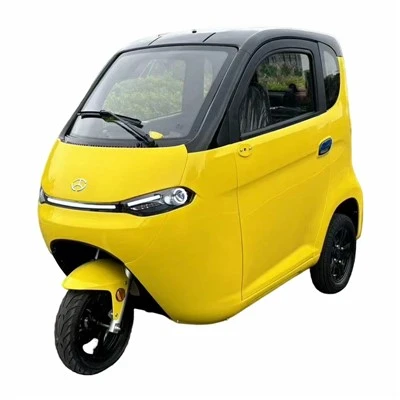
If you’re a delivery manager, fleet owner, or someone who’s been thinking about switching to electric, don’t sleep on these things. We’ve helped 120+ businesses across North America and Europe upgrade their fleets, and almost all of them say the LSEDCs outperform their expectations, even with heavy loads. If you want to chat about what your specific load needs are, or how we can customize a fleet for your route, hit us up. We’ll send a test car, do a load test on site, and walk through all the numbers—no sales pitch, just straight talk about what works for your business.
Electric Delivery Tricycle References:
- International Transport Forum. (2022). Urban Delivery Vehicles: Efficiency and Emissions. ITF Policy Brief.
- Society of Automotive Engineers. (2021). Low-Speed Electric Commercial Vehicle Load Capacity Standards. SAE International J3068.
- US Department of Energy. (2023). Last-Mile Delivery Electrification: Cost and Performance Analysis. DOE Office of Energy Efficiency & Renewable Energy.
- European Environment Agency. (2022). Urban Freight: Electric Vehicle Adoption Impacts. EEA Report No 12/2022.
Taizhou Xiangyuan New Energy Technology Co., Ltd.
As one of the most professional low-speed electric delivery car manufacturers and suppliers in China, we’re featured by quality products and low price. Please rest assured to wholesale cheap low-speed electric delivery car made in China here from our factory. Contact us for customized service and pricelist.
Address: NO.7HUANGJIN ROAD,METAL RESOURCES RECYCLING INDUSTRY BASE, LUQIAO, TAIZHOU, ZHEJIANG
E-mail: order@jiajiev.com
WebSite: https://www.jiaji-ev.com/
