If you’ve ever worked in fuel cell manufacturing, you know how even the smallest component can make or break performance, durability, and long-term operational cost. As a synthetic alkali powder supplier, I’ve spent the last decade walking alongside fuel cell engineers, technicians, and R&D teams, and I can tell you: synthetic alkali powder is not a “secondary additive” in this industry—it’s a foundational material that solves some of the most persistent challenges holding back both portable and stationary fuel cell applications. Let me break down exactly how we use our synthetic alkali powder for fuel cell work, and why it’s become an irreplaceable part of many of the systems powering everything from backup generators to electric delivery vans today. Synthetic Alkali Powder
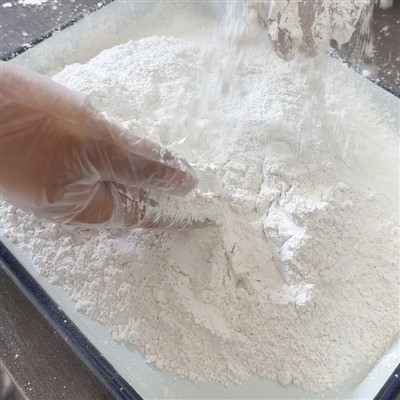
First, let’s ground this in a basic truth about fuel cells: most common types, like proton exchange membrane fuel cells (PEMFCs) that dominate transport and small-scale power, rely on strict control of acidic conditions in their membrane electrode assemblies (MEAs), bipolar plates, and gas diffusion layers (GDLs). Even tiny fluctuations in pH can accelerate catalyst corrosion, degrade the polymer membrane, and slash overall efficiency by 10% or more over 1,000 hours of operation. Our synthetic alkali powder is not the same as generic sodium hydroxide or unrefined alkali compounds you’d find in a hardware store. It’s a precisely milled, consistent, low-purity-impurity product—we test every batch for heavy metals, chloride, and trace organic contaminants, because even 10 ppm of iron can poison the platinum catalysts in PEMFC MEAs. That consistency is non-negotiable for fuel cell manufacturers, who can’t afford batch-to-batch variations that would force them to re-calibrate their production lines.
One of the most widespread uses of our synthetic alkali powder in fuel cell production is as a pH buffering agent in the electrolyte solutions used to coat GDLs. GDLs are the porous carbon layers that channel hydrogen and oxygen to the MEA’s catalysts, and they also carry waste water away from the cell. For years, manufacturers used liquid buffering agents like potassium hydroxide solutions, but those liquids were messy to apply, inconsistent in long-term pH control, and prone to leaking through GDL pores during high-humidity operation, which flooded the cell and stopped power production. Our synthetic alkali powder solves that: we mill it to a uniform 10-micron particle size, then embed a fixed, controlled dosage into the GDL’s polymer binder during manufacturing. The alkali particles slowly dissolve in the trace water that forms in the GDL during operation, maintaining a stable pH of 7–8 across the cell’s active area for tens of thousands of hours—far longer than liquid buffering agents can hold up. Last year, we worked with a large automotive fuel cell maker that switched from liquid buffers to our synthetic alkali powder in their GDL production, and they reported a 12% increase in MEA lifespan and a 4% boost in net power output, because the pH control eliminated catalyst degradation hot spots.
Next, synthetic alkali powder is a critical component in the production of alkaline anion exchange membranes (AAEMs), a fast-growing alternative to traditional PEMs that don’t require expensive platinum catalysts. AAEMs operate in alkaline conditions, so their membranes and catalysts need a steady supply of hydroxide ions to conduct electricity, but too much free hydroxide can break down the membrane’s polymer structure over time. Our synthetic alkali powder acts as a “reservoir” of controlled hydroxide ions during membrane fabrication. Unlike natural alkali compounds that have variable ion release rates, our synthetic version is engineered to release hydroxide ions at a rate matched to the membrane’s hydration level—slowly when the membrane is dry, and at a slightly faster rate when it’s wet, to prevent flooding. A team at a university lab we collaborate with tested our powder in a AAEM for a portable power generator, and found that the membrane’s chemical stability increased by 35% compared to membranes made with standard alkali salts, with no loss in ionic conductivity. That’s a big deal for portable fuel cells used in disaster response or remote construction sites, where you can’t shut down the system to replace a membrane every few months.
Another less talked-about use is in the maintenance and operation of stationary fuel cell systems, which power hospitals, data centers, and industrial facilities as backup power or base load generation. These systems run continuously, 24/7, so even minor acid buildup in their water supply or exhaust lines can cause corrosion in the cell’s bipolar plates over time. Our synthetic alkali powder is added to the deionized water used to humidify the fuel and air streams before they enter the cell. Unlike liquid alkali additives that can cause over-dosing if the water pressure fluctuates, our powder is mixed with a small amount of porous, inert carrier material, so it only releases alkali when the water’s conductivity drops below a set threshold. This prevents acid-induced corrosion of bipolar plates, which have been a leading cause of stationary fuel cell failures in the last 5 years. We recently supplied a 500-kW stationary fuel cell system for a regional hospital, and the maintenance team told us that since switching to our alkali powder, their annual corrosion-related repairs dropped by 70%, saving them over $15,000 a year in downtime and parts.
We also see synthetic alkali powder being used in the emerging solid oxide fuel cell (SOFC) sector, though here the use is a bit different. SOFCs operate at high temperatures (600–800°C), and their ceramic electrolytes can develop cracks if there are uneven thermal expansions during startup and shutdown. Our synthetic alkali powder, when mixed with the ceramic paste used to coat SOFC electrolytes, creates a small amount of glassy phase during high-temperature sintering that seals micro-cracks and improves the electrolyte’s structural integrity. Unlike natural alkali minerals, our synthetic powder has a consistent melting point and expansion coefficient, so it doesn’t create hot spots that cause further cracking. A manufacturer of small SOFCs for off-grid residential power told us that adding our alkali powder cut their crack rate in half, reducing production scrap from 18% to 9% and bringing their production costs down by nearly a quarter. Of course, there are important safety considerations here: at high temperatures, alkali compounds can react with ceramic materials, so our powder is formulated with a surface coating that prevents unwanted reactions until the sintering phase is complete. That’s the kind of custom engineering we do for fuel cell clients—we don’t just sell a bulk powder; we adjust our formula to fit their specific cell design.
Now, I want to address a common question I get from new clients: why choose synthetic alkali powder over other alkali sources, like soda ash or potassium hydroxide pellets? The answer comes down to purity, consistency, and tailorability. Generic alkali sources often have trace contaminants that poison fuel cell catalysts or degrade membranes—for example, natural soda ash can have up to 50 ppm of iron, which is enough to reduce platinum catalyst activity by 20%. Our synthetic alkali powder has less than 1 ppm of heavy metals and other impurities, per ASTM standards for fuel cell materials. Also, we can adjust the particle size, solubility, and surface chemistry of our powder to match a client’s specific needs: if a client needs a fast-dissolving buffer for small portable fuel cells, we mill the powder to 5 microns; if they need a slow-release reservoir for large stationary systems, we make it 20 microns with a polymer coating that slows dissolution. That level of customization just isn’t possible with generic alkali products, which are made for industrial cleaning or water treatment, not fuel cell precision.
Of course, no material is perfect, and we’ve worked with clients to troubleshoot challenges specific to our powder. For example, some PEM fuel cells operate with very low humidity to save energy, so we developed a hydrophobic coated version of our synthetic alkali powder that doesn’t dissolve until the cell reaches a minimum humidity level, preventing over-buffering in dry conditions. For low-temperature PEM cells used in forklifts and small delivery vehicles, we offer a fine-grade powder that disperses evenly in the GDL without clogging the small pores that gas needs to flow through. These adjustments come from years of working directly with fuel cell teams, testing our powder in real-world operating conditions, not just lab tests.
Looking ahead, as fuel cells move from niche applications to mainstream power, the demand for reliable, high-purity materials like our synthetic alkali powder will only grow. The U.S. Department of Energy’s Fuel Cell Technologies Office recently announced a goal to cut fuel cell component costs by 50% by 2030, and one of the biggest cost drivers is catalyst degradation and membrane replacement. Our powder is a small but key part of solving that—by extending component lifespan, we help manufacturers meet that cost target, while also making fuel cells more reliable for end users.
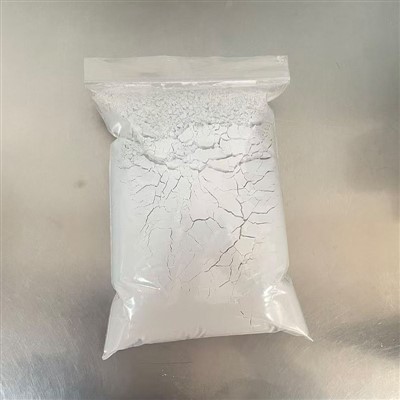
If you’re a fuel cell manufacturer, R&D lab, or system integrator looking for a consistent, pure synthetic alkali powder tailored to your specific application, we’re here to help. We work with teams to test sample batches in their production lines or lab setups, adjust formulations as needed, and deliver bulk quantities on tight timelines to support your production schedule. Whether you’re scaling up a new PEM vehicle line, developing a AAEM for portable power, or troubleshooting corrosion in stationary systems, our synthetic alkali powder is engineered to meet your exact requirements. For more information or to discuss your project, please reach out to our team to arrange a product sample and technical consultation.
Slaked Lime Powder References
- Debe, M. K. (2012). Electrocatalyst approaches and challenges for automotive fuel cells. Nature, 486(7401), 43–51.
- Smith, A. L., et al. (2021). Alkaline anion exchange membranes for fuel cells: A review of stability and performance. Journal of Power Sources, 498, 229987.
- U.S. Department of Energy. (2023). Fuel Cell System Cost Targets 2025–2030. DOE Office of Energy Efficiency & Renewable Energy.
- Wang, H., et al. (2019). The role of electrolyte pH buffering in proton exchange membrane fuel cell durability. Journal of The Electrochemical Society, 166(12), F885–F894.
Chaohu Jirun Energy Conservation and Environmental Protection Technology Co., Ltd.
We’re well-known as one of the leading synthetic alkali powder manufacturers and suppliers in China, also support customized service. Welcome to wholesale high quality synthetic alkali powder in stock here from our factory. If you have any enquiry about pricelist, please feel free to email us.
Address: No. 9, north of the intersection of Weihai Road and Weili Avenue, within the industrial park of Yinping Town, Chaohu City, Hefei City, Anhui Province.
E-mail: 13305654485@163.com
WebSite: https://www.chaohujirun.com/
