If you’ve ever stood outside a burning commercial building or watched a fire response footage, you might have noticed those unbroken glass panes holding their shape even as flames rage nearby—those are fire rated windows, and their structural integrity is not just a design choice, it’s a life-saving, code-mandated detail most people never stop to think about. As a supplier of these specialized windows, I get a lot of questions from architects, building managers, even homeowners who assume all fire-rated glass is just thicker or tinted. Today, I want to break down what structural integrity actually means for fire rated windows during a fire, how we test for it, and why it matters far more than just holding back flames for an hour. Fire Rated Window
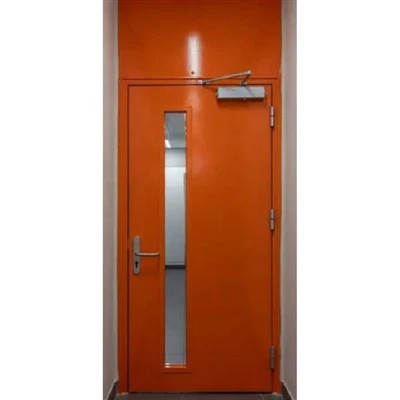
First, let’s define structural integrity in this specific context. It’s not about the window staying perfectly clear or blocking smoke (that’s thermal integrity). Structural integrity means the window assembly—frame, glass, sealants, and fasteners—does not fail catastrophically for the entire duration of its rated fire resistance. No large cracks that could let fire breach into adjacent spaces, no glass panels that pop out entirely, no frame warping so badly it blocks exit paths or collapses onto firefighters below. For example, a 90-minute fire rated window is required to maintain structural integrity for 90 full minutes of standard fire exposure, which simulates the heat of a real building fire that can reach up to 2,000°F (1,093°C) in peak phases.
A lot of people confuse fire rated windows with regular tempered or laminated glass, but that’s a mistake. Regular tempered glass shatters at around 1,200°F (649°C), and it breaks into tiny, sharp shards that can fall out of frames quickly under heat stress. Laminated glass holds together after breaking, but it was never designed to withstand the kind of sustained heat and pressure that a fire produces—so it will fail structurally long before meeting a fire rating. Fire rated windows are built with specialized glass (like ceramic fire glass, which is made to expand and insulate when heated, or wired glass, a older but still code-compliant option with a metal mesh embedded) paired with steel, aluminum, or composite frames that are tested to resist warping. The sealants around the glass are also high-temperature, silicone-based compounds that don’t soften or crack at extreme heat, a detail we spend extra time perfecting because even a small sealant failure can lead to a total structural breakdown.
Testing is where structural integrity gets proven, not just assumed. Every fire rated window we supply goes through ASTM E119 or UL 263 testing, the two global standards for fire resistance. Here’s how that test works: the window is installed in a wall assembly, placed in a furnace that ramps up to match the standard fire curve—slow at first, then speeding up as heat intensifies. Over the rated duration (from 20 minutes to 3 hours, depending on the window’s rating), inspectors monitor three things: any flame penetration through the assembly, any cracks larger than a quarter-inch (which can let fire through), and whether the glass or frame dislodges from the wall. In our testing lab last quarter, we had a customer’s prototype 2-hour window that passed thermal integrity (no smoke) but failed structural integrity at 107 minutes—why? The aluminum frame warped 1.2 inches, enough that the glass panel shifted and popped out of its seal, creating a 18-inch gap where flames breached. That’s a common mistake many non-specialized suppliers make: they focus on glass performance and skimp on frame design. For us, every window’s frame is sized and tempered to match the glass’s expansion rate during heating, so warping is minimized even under 2,000°F heat.
Another critical factor is how the window is installed, because even the best assembly will fail if it’s put in wrong. I’ve seen this firsthand on jobsites where contractors cut corners: they use regular caulk to seal the window frame instead of fire-rated sealant, or they leave gaps around the frame larger than the code allows (usually no more than 1/8 inch for rated assemblies). A study by the National Fire Protection Association (NFPA) found that 30% of fire rated window failures in commercial buildings between 2018 and 2022 were due to improper installation, not a flaw in the product itself. That’s why we don’t just sell windows—we provide training for our clients’ installation teams, because structural integrity only works if the window is integrated correctly into the building’s structure.
What happens when structural integrity fails during a fire? Let’s use a real example: a 2021 office fire in a mid-sized commercial building in the Midwest. The building used fire rated windows on its atrium, but the contractor installed a 45-minute rated window in a space that required a 90-minute rating. After 58 minutes, the glass shattered, the frame warped, and fire spread from the 3rd to the 5th floor via the atrium’s open window gap. The damage was estimated at $2.2 million, and while no one was injured, the outcome could have been much worse. In contrast, a nearby apartment building we supplied windows for in 2020 had a kitchen fire on the 2nd floor that spread to the exterior wall. The 1-hour rated windows on the 3rd and 4th floors stayed structurally intact for 72 minutes, giving residents on those floors time to evacuate safely before firefighters could contain the fire.
Many people ask if there’s a way to improve structural integrity beyond minimum codes. For high-rise buildings or hospitals, we offer enhanced fire rated windows with a 3-hour rating, paired with stainless steel frames that resist even more heat. These windows are tested to handle not just fire, but also the impact of firefighting hoses or debris falling from upper floors, which is a real concern for high-rise structures. We also use intumescent sealants that expand when heated, creating a tighter seal between the glass and frame as temperatures rise—this adds an extra layer of defense that prevents gaps from forming even if there’s minor frame warping.
A common misconception is that fire rated windows are ugly, thick, or obscure views. Modern designs have come a long way: our 90-minute windows are only 1.5 inches thick, have a 90% light transmission rating (almost equal to regular glass), and come in slim aluminum frames that blend seamlessly with modern architecture. Architects love them because they can use them in curtain walls, storefronts, and even residential homes without sacrificing design or natural light, while still meeting fire code requirements.
As a supplier, our job isn’t just to sell a window—it’s to ensure that when a fire breaks out, that window does exactly what it’s designed to do: contain the fire, protect occupants, and give first responders time to act. That means every part of the assembly—glass, frame, sealants, fasteners—has to be engineered, tested, and installed to maintain structural integrity for its entire rated duration. I’ve been in this industry for 12 years, and I’ve seen too many buildings suffer avoidable damage because of overlooked details, but the right fire rated window can make all the difference.

If you’re an architect, building manager, or contractor working on a project and need to understand which fire rated window is right for your space, or have questions about structural integrity, we’re here to help. Reach out to our team to discuss your specific needs, get technical specifications, or schedule a consultation to find the best solution for your project.
Rolling Shutter Door References:
ASTM E119, Standard Test Methods for Fire Tests of Building Construction and Materials
UL 263, Standard Methods of Fire Tests of Building Construction and Materials
National Fire Protection Association (NFPA) Report on Fire Rated Window Failures in Commercial Structures, 2023
Fire Protection Research Foundation (FPRF) Evaluation of Fire Rated Window Assembly Performance, 2022
Hebei Hong’an Fire Door Co. Ltd.
Hebei Hong’an Fire Door Co., Ltd. is one of the most professional fire rated window manufacturers and suppliers in China, featured by quality products and low price. Please rest assured to wholesale advanced fire rated window made in China here from our factory. Customized orders are welcome.
Address: Bianbian Industrial Zone, Hejian City, Cangzhou City, Hebei Province, China
E-mail: hongandoor@outlook.com
WebSite: https://www.honganfd.com/
